

Crochet Tension Unraveled: Why Your Stitches Look Uneven and How to Fix It
Does something about your crochet look a little…off? Maybe your starting chain is pulling tight, your fabric looks uneven or a project that began beautifully has slowly changed shape. You counted your stitches twice, so what gives?
Your crochet tension may be the culprit.
Tension is the quiet force behind every stitch you make. It affects the size and shape of your stitches, the drape of your fabric and the finished size of your project. But tension is not just a matter of skill. Your hook, yarn, grip, posture, environment and even your mood can all change how tightly or loosely you crochet.
If your tension feels unpredictable, don’t panic. This guide will help you understand what is happening, spot common tension problems and make small adjustments that lead to more consistent crochet.

This post contains affiliate links that support TLYCBlog content. All opinions are my own. Read my full Privacy and Disclosures statement here.
PIN IT NOW, MAKE IT LATER
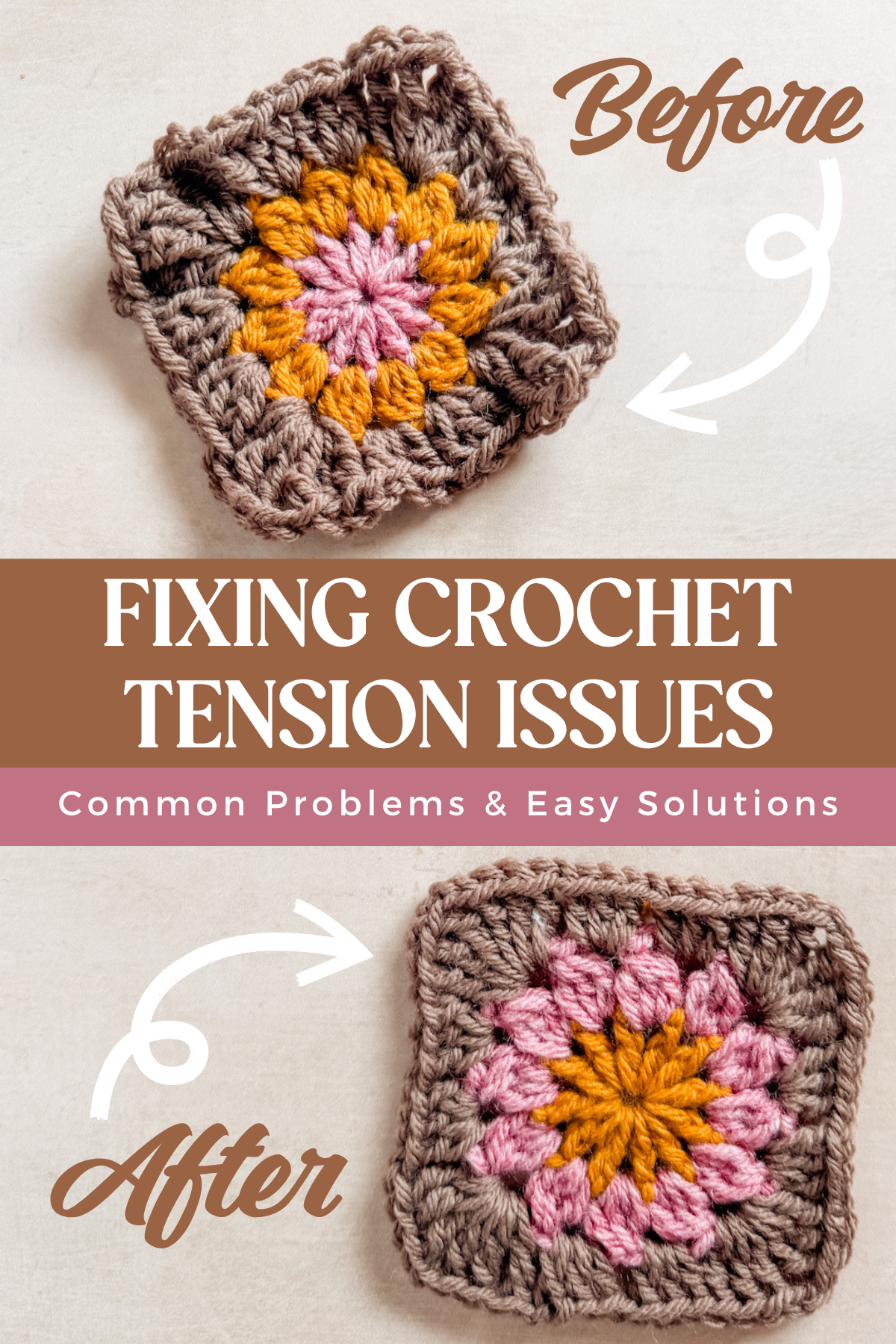
What Is Crochet Tension?
Crochet tension describes how tightly or loosely the yarn moves through and forms your stitches as you work. Gauge is the measurement of that tension, usually expressed as the number of stitches and rows within 4 inches.
Think of tension as the way you crochet and gauge as the measurable result. Your tension may also change as you relax into a project, which is why a small swatch does not always reflect your natural working rhythm.
Different stitches carry tension differently, too. Slip stitches are naturally compact, while taller stitches have more room for variation. The goal is not “perfect” tension. It is tension that remains consistent throughout your project.
What Affects Crochet Tension?
If your tension changes, it does not automatically mean you are doing something wrong. Crochet is a physical process, and plenty of small variables can change the way your yarn moves.
// 1. How You Hold Your Hook and Yarn
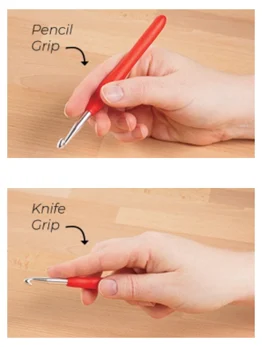
Most crocheters use some version of a pencil grip or knife grip. Neither is better, and both can produce beautiful, even stitches. The best grip is the one that feels comfortable and allows your hook to move freely.
The way you feed the yarn through your non-hook hand matters just as much. Every place the yarn touches or wraps around a finger creates friction.
- More contact points usually create more resistance, which can tighten your tension.
- Fewer contact points allow the yarn to move more freely, which can loosen tension.
Experiment with wrapping the yarn once or twice around a finger, passing it over your index finger or weaving it between multiple fingers. There is no single correct way to hold yarn. You are looking for enough control to feed it smoothly without squeezing.
Your hands can change throughout the day, too. Very dry skin may catch on certain fibers, while lotion that has not absorbed fully may make yarn slide differently. Give your moisturizer time to sink in before picking up your project.
// 2. Your Crochet Hook
Your hook does more than make the stitch. Its shape, material, and finish all change how the yarn feels as it moves.
Smooth metal hooks often allow yarn to glide quickly, while unfinished wood or bamboo may provide more grip. Resin, plastic, and coated hooks can fall anywhere in between. The exact experience will depend on the hook and yarn, so treat these as tendencies rather than rules.
The hook shape matters, too. Inline and tapered hooks catch and release yarn differently. One style may help you form more uniform loops, while another may feel more fluid in your hand. If you continually struggle with a particular yarn, changing the hook style or material may help.
Most importantly, use the same exact hook throughout a project whenever possible. Two hooks labeled with the same size can still feel or measure slightly different, especially when they come from different brands.
Want to understand your hook better? Visit my complete Crochet Hooks 101 guide.
// 3. Yarn Weight and Fiber
Fine yarns create smaller stitches, which can make small differences in tension more visible. Very bulky yarns bring more weight and drag, which may encourage you to pull harder as you work.
Fiber content changes the experience as well:
- Wool has natural elasticity and often bounces back after being stretched.
- Cotton has lower elasticity, so differences in tension may remain more visible in the fabric.
- Acrylic varies widely. Some acrylics are soft and springy, while others feel slick, fuzzy, or firm.
- Silk, alpaca, and other specialty fibers can feel slick, fuzzy, or drapey depending on how the yarn is constructed.
If a yarn feels difficult, do not immediately assume the problem is your hands. Try a different hook material or holding method before deciding the yarn is not for you.
// 4. Your Body and Environment
Where and how you crochet can quietly change your tension.
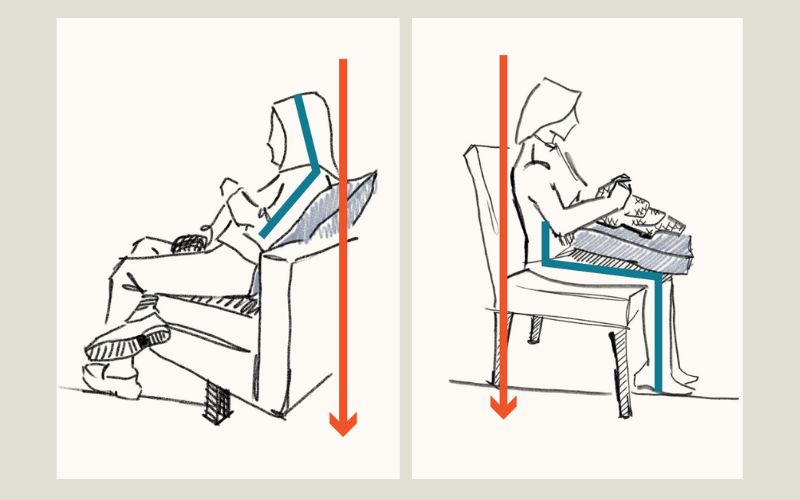
Think about the difference between crocheting upright in a supportive chair and curling up in bed. Your shoulders, elbows, and hands sit in different positions. Hunching forward may tighten your entire upper body, including your grip. Reclining without arm support can make your hands work harder to control the project.
Aim for a position that feels supported but relaxed. Keep the project close enough that you are not reaching, and use pillows beneath your elbows or project when they help.
Stress, excitement, and fatigue can affect your grip as well. You may crochet more tightly during an intense movie or more loosely once you relax into a familiar rhythm. Pausing often, setting the project down, or repeatedly pulling yarn from a tangled skein can also interrupt your flow.
None of this means you need a silent room and perfect posture every time you crochet. It simply explains why your tension may be different on Tuesday than it was on Sunday.
Common Crochet Tension Problems and How to Fix Them
Now that you know what influences tension, let’s troubleshoot the problems crocheters most often notice.
// Problem 1: Your Starting Chain Is Too Tight
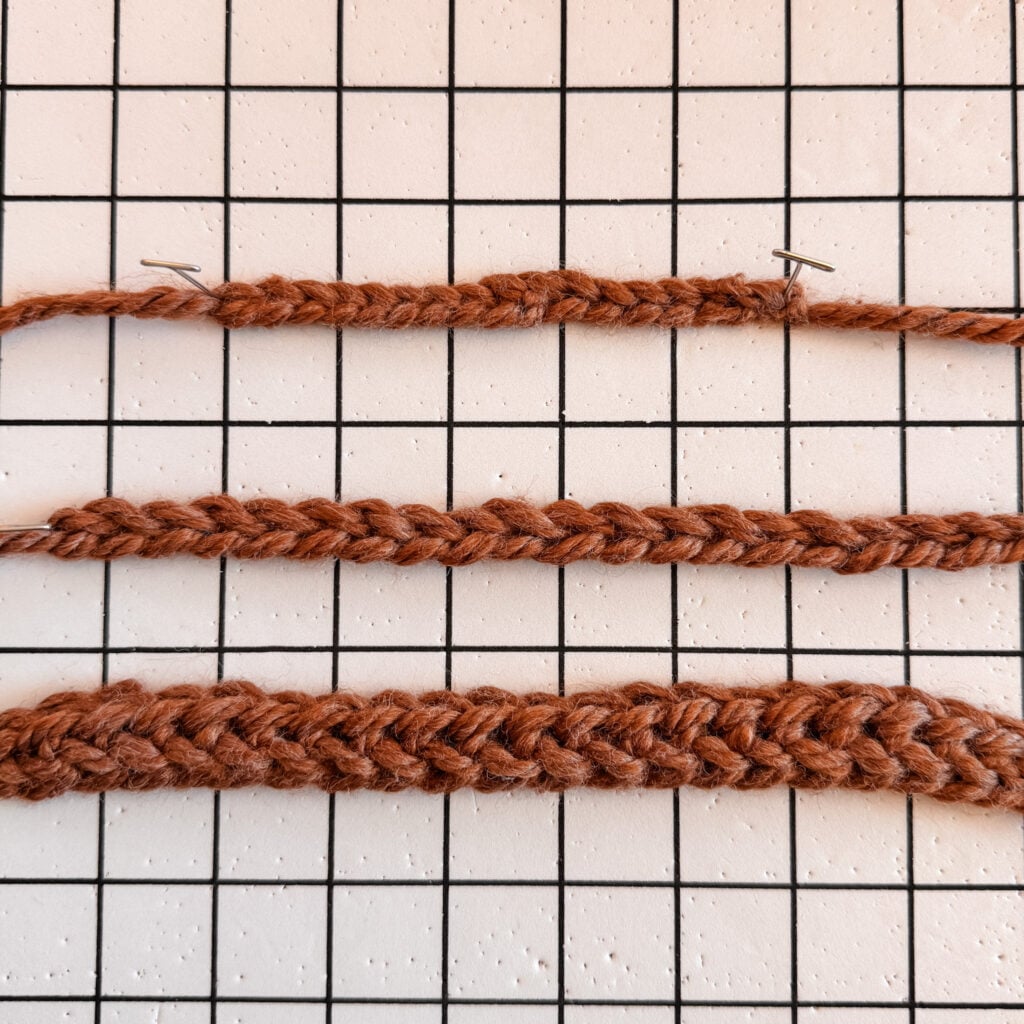
Starting chains are notorious for becoming too tight because they lack an existing row of fabric to support them. Many crocheters unconsciously pull each chain snug, only to discover that the next row will not fit comfortably.
Try this:
- Make the starting chain with a hook 0.5 to 1 mm larger than needed, then switch to the pattern hook.
- Let each loop slide onto the shaft of the hook before making the next chain. The shaft determines the size of the loop, while keeping it near the narrower throat can make your chains too tight.
- Replace the chain with a foundation single crochet, half double crochet, or double crochet when the pattern allows (learn how to make foundation chains!).
// Problem 2: You Cannot Properly Tension the Working Yarn
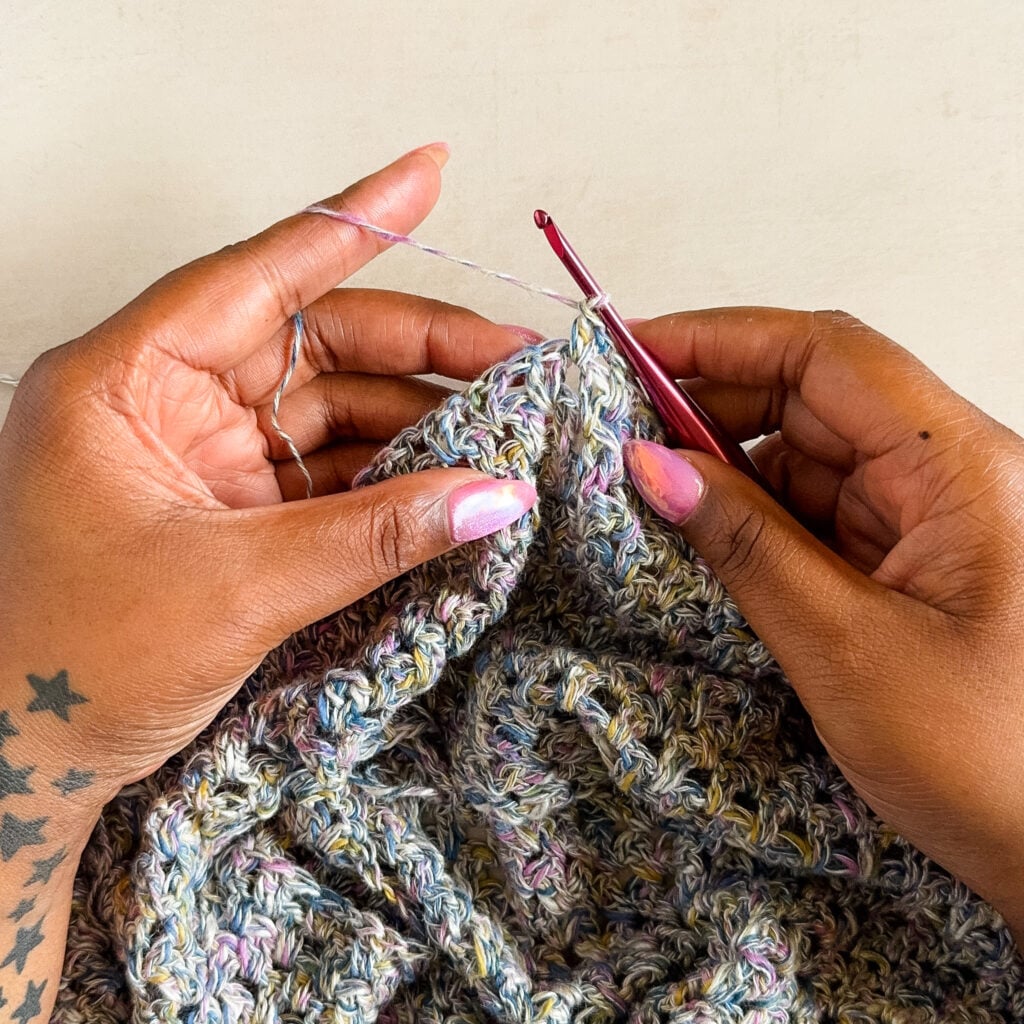
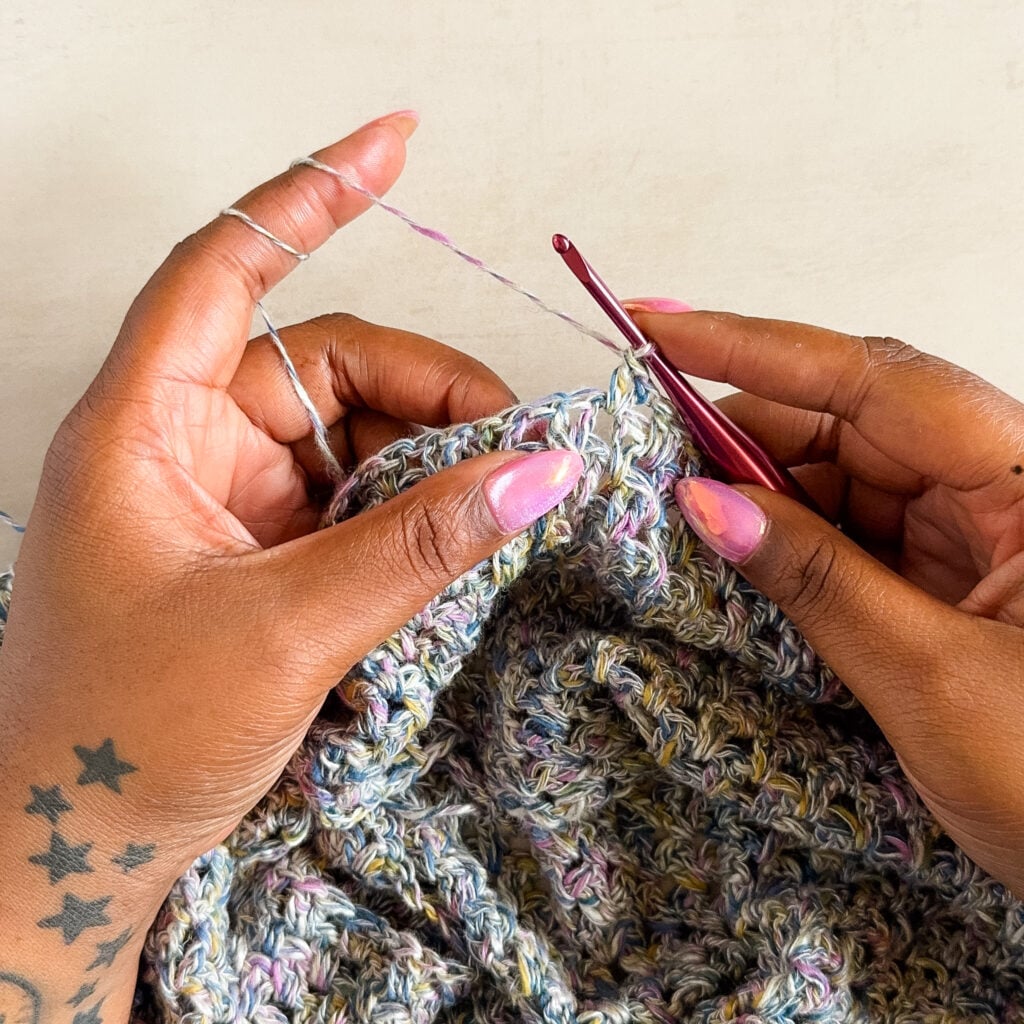
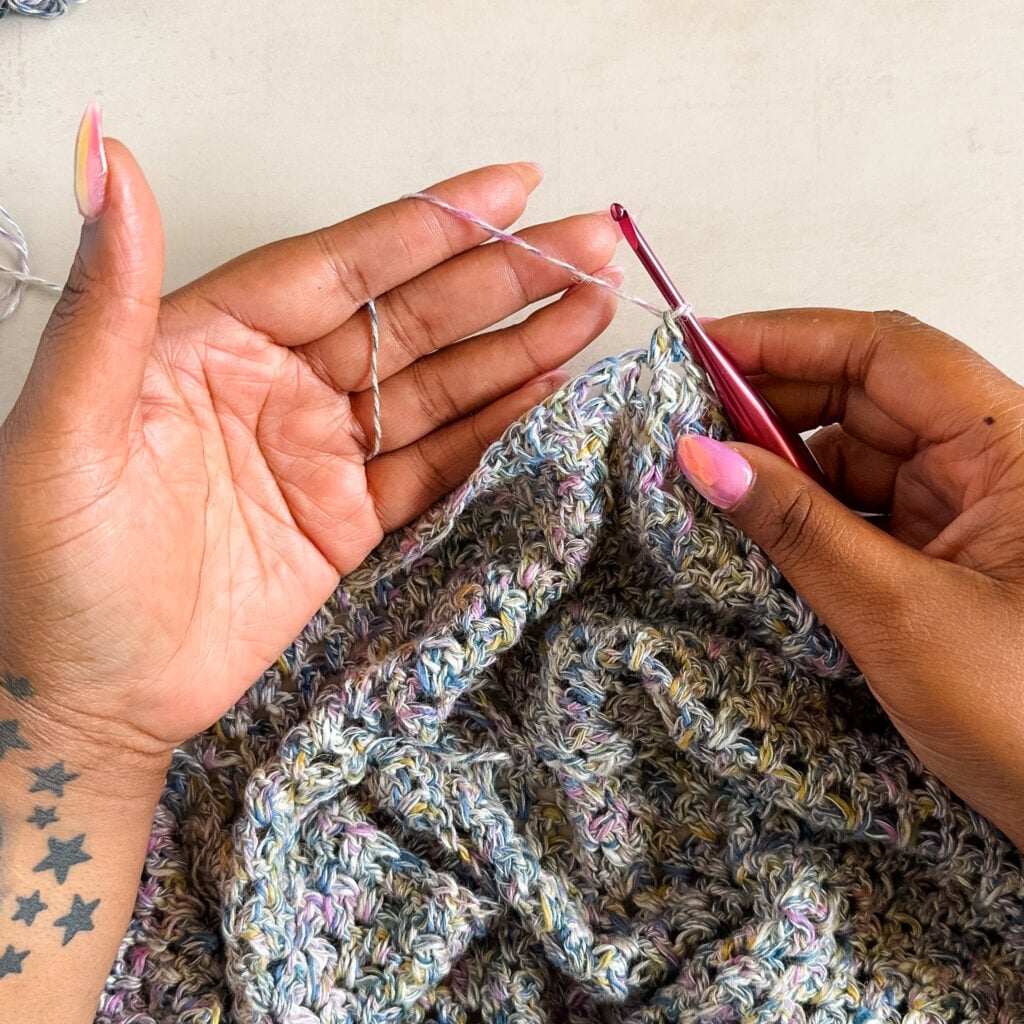
If the yarn feels out of control, you may respond by squeezing it or stretching your hands far apart. Both can make it difficult to repeat the same motion consistently.
Remember this simple equation: friction creates tension. If your stitches are too tight, remove one wrap or contact point. If the yarn feels too loose, add another point of contact.
Use the fingers that feel natural to steady the fabric near the stitch you are making. This gives the hook a stable place to work without requiring a death grip on the yarn.
// Problem 3: The Yarn Is Not Feeding Smoothly
Yarn that snags or resists will interrupt your rhythm and often make your stitches tighter.
Before changing your grip, check the yarn path:
- Pull out a small amount of slack before beginning the next row.
- Make sure the yarn is not caught under a chair leg, inside a bag, or around another skein.
- Try a yarn bowl, sturdy project bag, or yarn caddy.
- If a center-pull skein keeps collapsing or tangling, work from the outside instead.
- Stop and untangle knots instead of pulling harder against them.
Your hands cannot create consistent tension if they are constantly fighting the skein.
// Problem 4: Your Tension Changes Mid-Project
This is incredibly common. You may loosen up after the first few rows, switch hooks without realizing it, change where you are sitting or simply have a different rhythm from one day to the next.
Before assuming tension is the problem, confirm your stitch count. In a section that should remain the same width, lay the fabric flat every few rows and compare it with an earlier section. Confirm that you are using the same hook and that the yarn is feeding freely.
If the difference is minor, blocking may help the fabric settle. If the change is obvious or affects the finished measurements, you may need to unravel or frog back to the point where the tension shifted. It hurts, but it hurts less than finishing a project you will never be happy with.
If your hands need time to settle, make a few rows on a practice swatch before returning to an important garment or fitted project.
Enjoying this Post? Pin It for Later!
// A Note About Tunisian Crochet Tension
If you are learning Tunisian crochet, you may notice that tension behaves a little differently than it does in traditional crochet. As you work the forward pass, more and more loops collect on your hook. The first part of the row may feel looser, while the added loops can create more resistance as you approach the end.
Watch the height of each loop as you work across the row. If the first loop begins to stretch, gently tug it before continuing. As the loops accumulate, spread them along the shaft or cable rather than letting them bunch up near the hook head. Before beginning the return pass, check that the last few loops are the same height as their neighbors.
Work the return pass with the same smooth, steady motion, taking care not to pull each loop tighter as you work it off the hook. Consistent tension across both passes will help create even stitches and straighter edges.
The Golden Loop: A Small Adjustment With a Big Impact
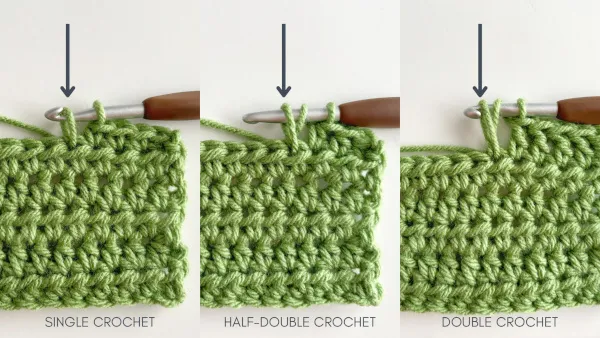
Sometimes your stitch gauge may match the pattern, but your row gauge does not. Your swatch is the correct width, but it becomes too short or too tall as you add rows.
That may come down to the Golden Loop.
When making a taller stitch, such as a half double crochet or double crochet, insert your hook and pull up a loop. The height of that loop helps determine the final height of the stitch.
- Pull the loop up higher, and the finished stitch becomes taller.
- Keep the loop close to the fabric, and the stitch becomes shorter.
Your hook size has a major influence on stitch width, but adjusting the golden loop can help you fine-tune row height. The key is not lifting the loop to a particular “correct” height. It is lifting it to the same height every time.
Practice slowly for a few rows and watch that loop. Once your hands learn the motion, it will become part of your natural rhythm.
How to Adjust Crochet Gauge Through Tension
Always begin with the yarn, hook, and stitch pattern recommended in your pattern. Make a swatch approximately 6 to 8 inches across so your hands have time to settle into their natural working tension. If the project is worked in the round, make your swatch in the round as well. Wash and block it as you plan to treat the finished project, then count the stitches and rows across the center.
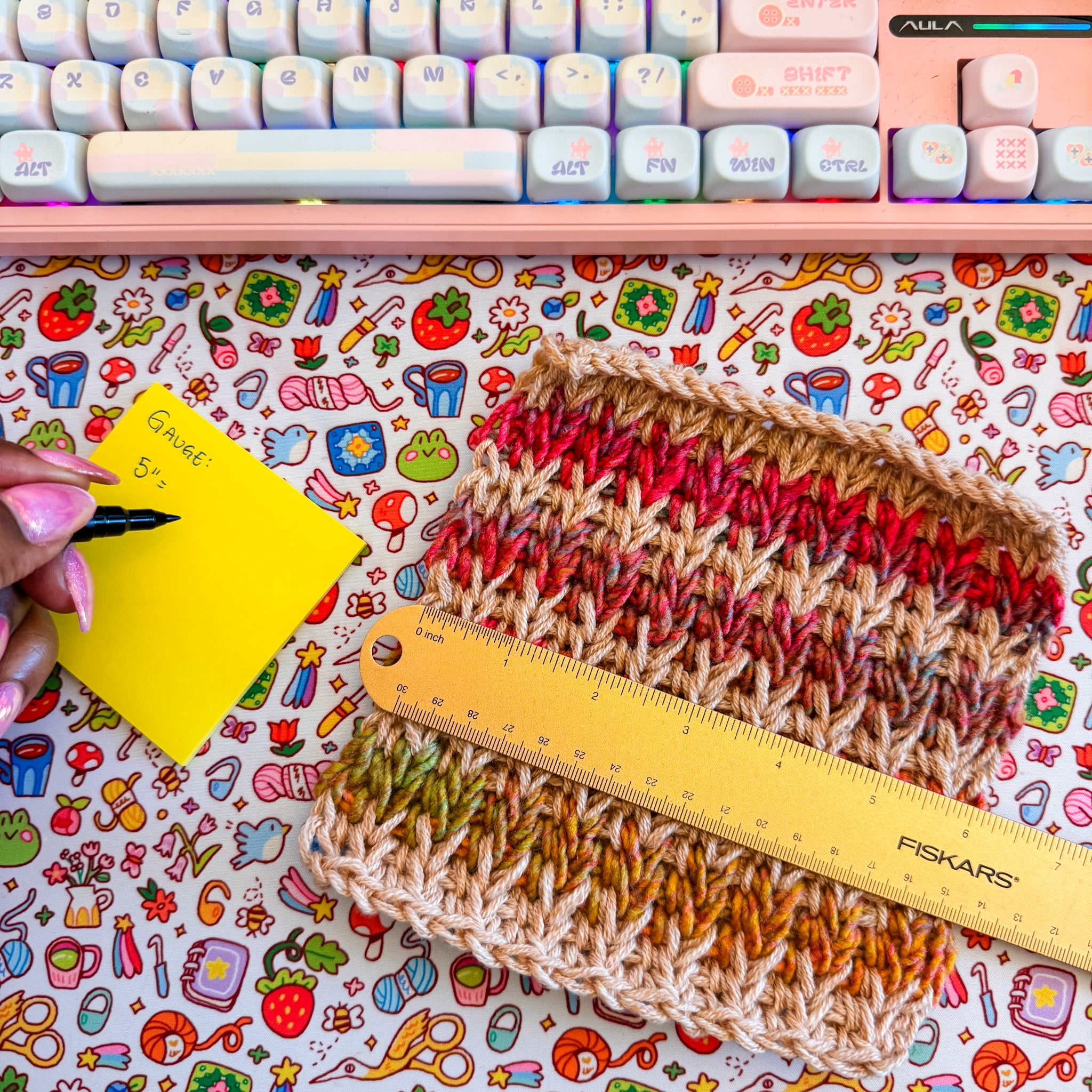
If your stitch gauge is off:
- Too many stitches: Your stitches are smaller than the pattern gauge. Try the next larger hook.
- Too few stitches within 4 inches: Your stitches are larger than the pattern gauge. Try the next smaller hook.
If your stitch count matches but your row count does not, pay attention to the height of your golden loop. You may need to lift it slightly higher or keep it closer to the fabric.
Change only one variable at a time, then make another swatch. That is the easiest way to learn which adjustment actually worked.
How to Practice More Consistent Crochet Tension
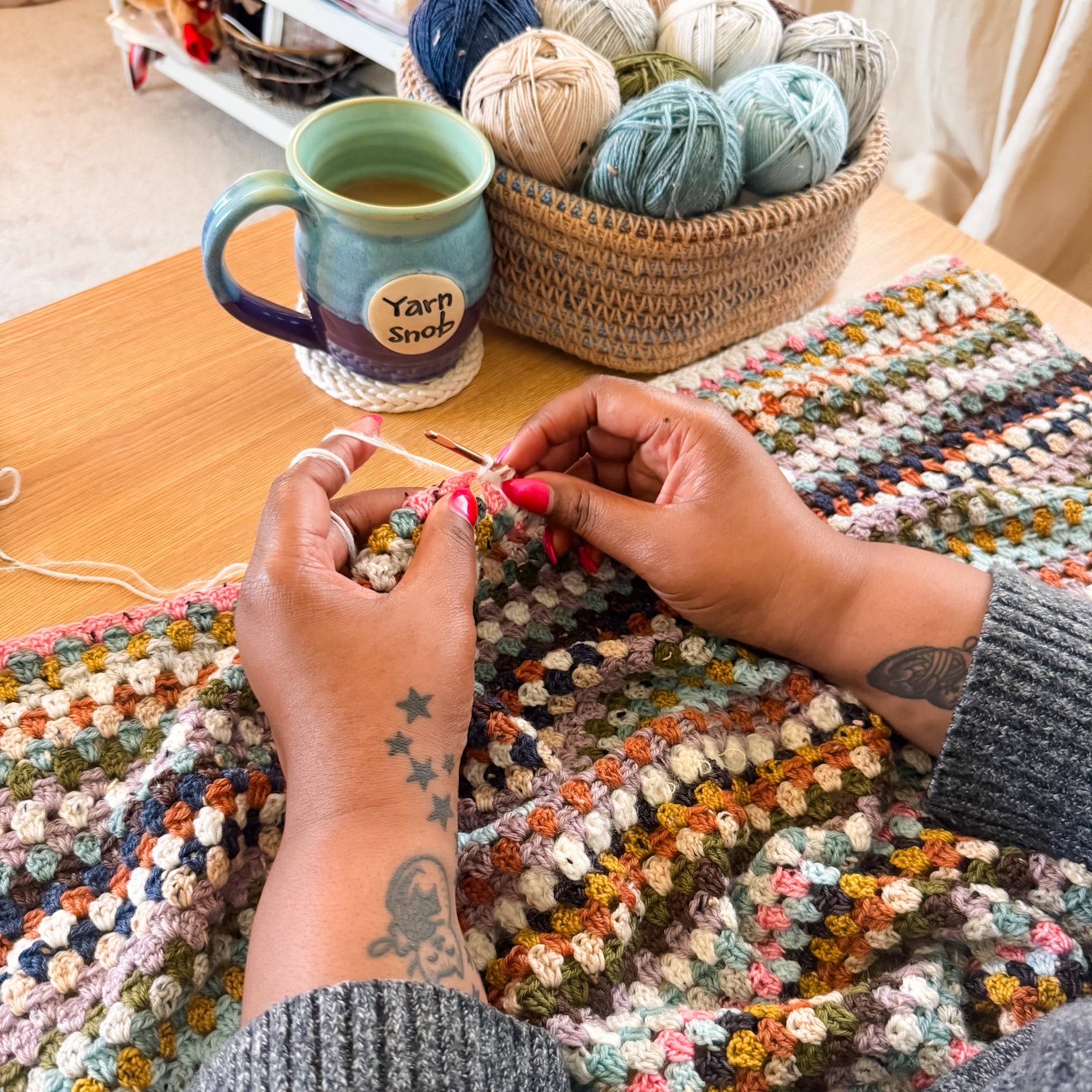
Consistent tension develops through repetition, not force. Instead of trying to hold everything tighter, give your hands a chance to learn a smooth, repeatable motion.
Try this tension practice:
- Choose a smooth, light-colored worsted-weight yarn and a hook that feels comfortable.
- Make a swatch in single or double crochet.
- Crochet one row intentionally tight and one intentionally loose.
- Notice what changed in your fingers, working loop, and finished stitches.
- Make several rows using the tension that feels most comfortable and sustainable.
- Lay the swatch flat every few rows and check whether the edges and stitch sizes remain consistent.
Purposefully exaggerating tight and loose tension helps you recognize those sensations before they take over an entire project.
Keep notes when you find a combination that works. Record the hook brand and size, yarn, and any special way you held it. Your future self will thank you.
// Crochet Should Not Hurt
There is a difference between the awkwardness of learning a new motion and the pain that tells you something needs to change.
If your wrist, hand, neck, shoulder, or back begins to hurt, STOP and give your body a break. Check your grip, posture, and support before continuing. More frequent breaks and a lighter grip may help reduce strain, but do not try to crochet through worsening pain, numbness, or tingling. If discomfort persists, talk with a qualified healthcare professional.
No stitch or deadline is worth injuring yourself.
// Give Your Crochet Tension Time
Tension is one of those crochet skills that develops quietly. Every swatch, project, and frogged row teaches your hands a little more about how the yarn should feel.
Even experienced crocheters have off days. A new hook or a stressful afternoon can throw off your tension in ways you never imagined. That does not erase your progress. It simply gives you another clue about what your hands need.
Experiment with different hook materials and styles, try holding your yarn differently, and experiment with your posture and environment until you find a combination that feels comfortable and repeatable. Consistent crochet comes from rhythm, and rhythm comes from practice.


Is there a video link about tension for lesson 10 in crochet academy?
Hey there, Marni 🙂 At this time, no, we have not put out a video about tensioning. However, we do cover some tension subjects in this video. Let me know if you have any specific questions on tensioning!
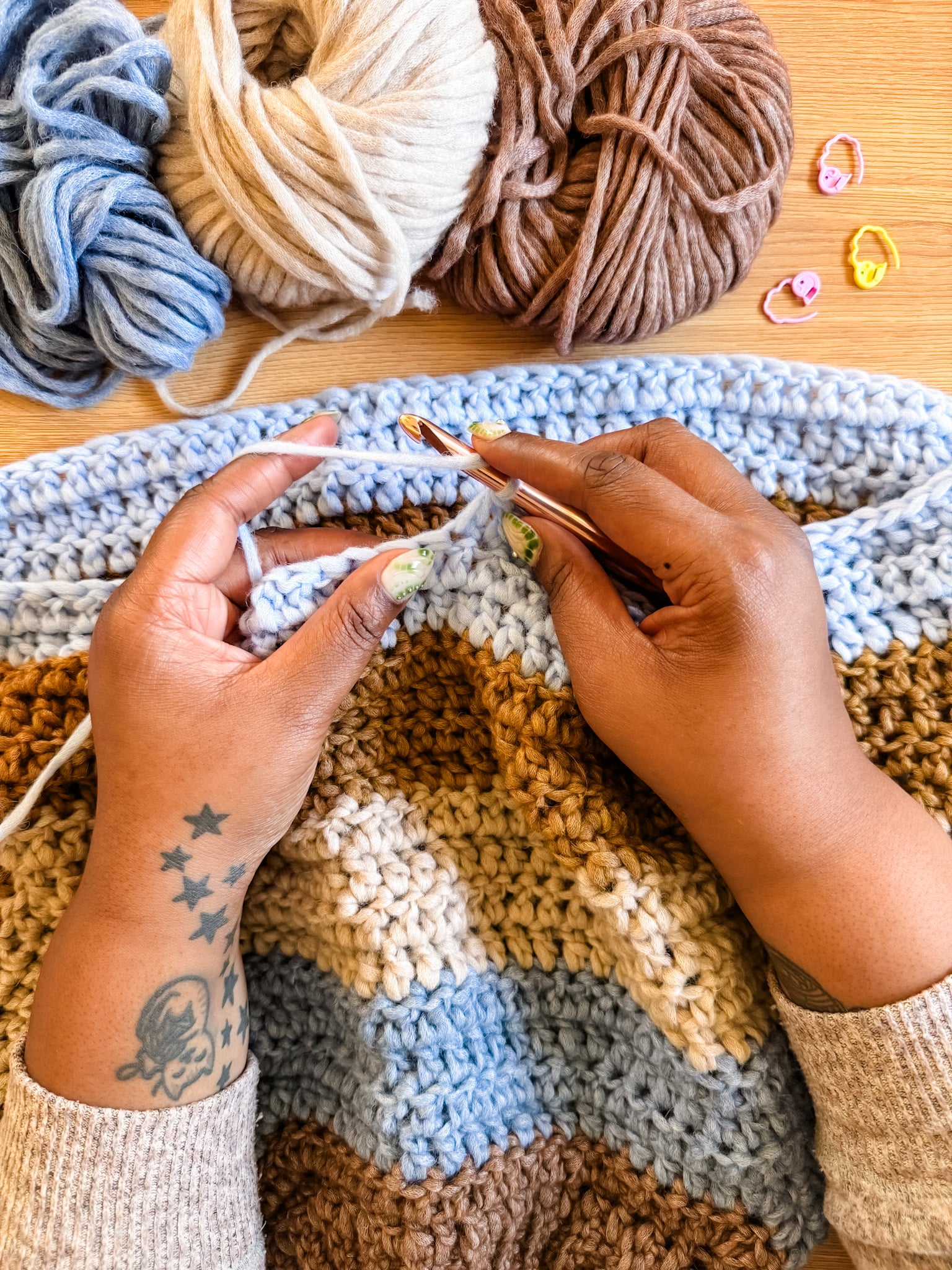
What is the name/brand of the yarn shown in the very top photo? I love your tutorials!!! Thank you!
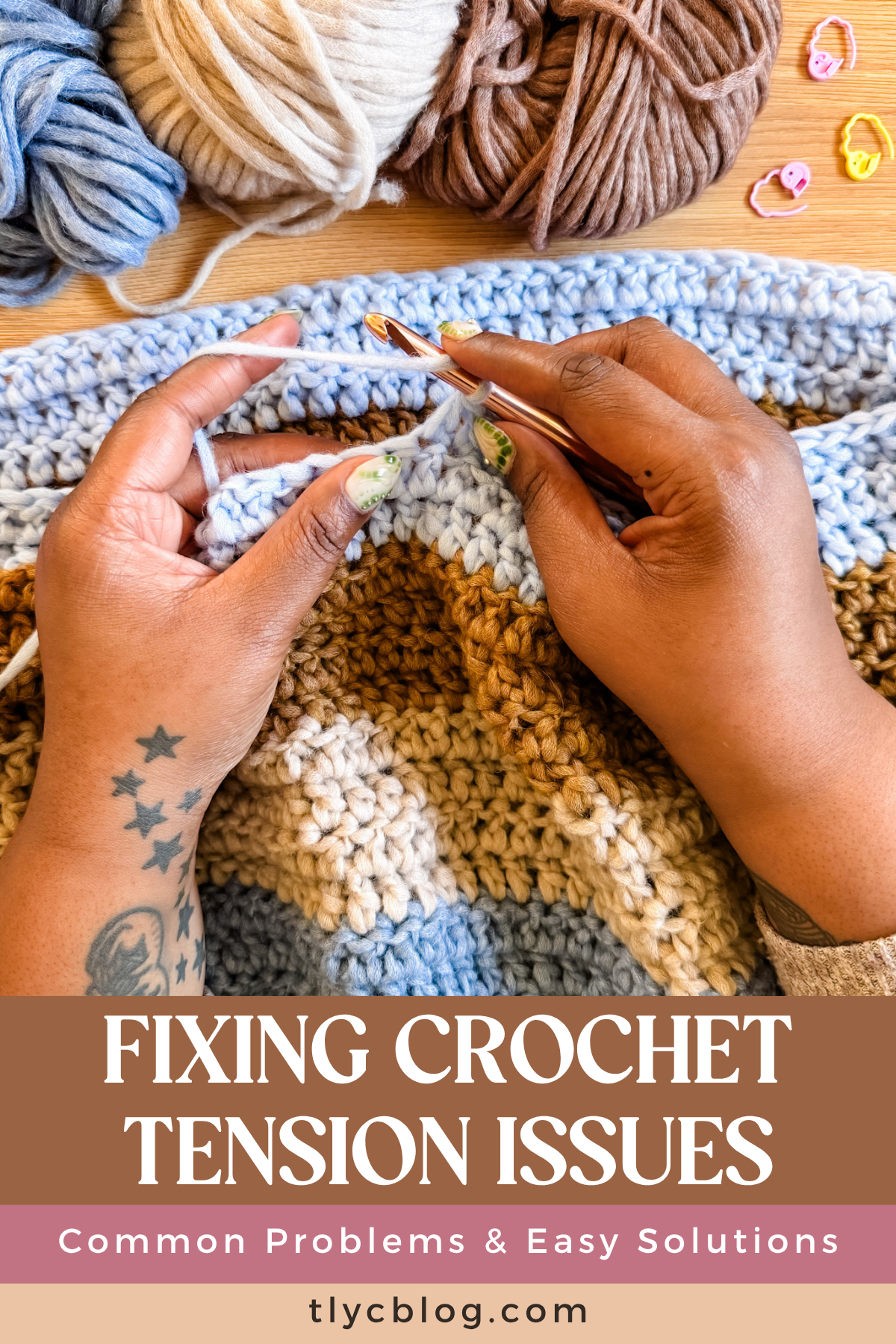
Hey there, Laura 🙂 That would actually be TL Yarn Crafts and Hobbii’s collaboration yarn, Apricity. It can be found here. Happy stitching!
I’m a new crocheter and my biggest change to correcting my tension was not to keep the yarn up by the hook, sliding it down the shaft came naturally after a few rows and greatly relaxed my tight knit
Hey there, Lucy 🙂 Thank you for sharing your experience! It is different for everyone, and it’s always nice to hear how others get used to tensioning, grip, and the motions in general
I always assure my yarn goes down the shaft so that each stitch is the right size. I have had to slow down some but the results are worth it. I learned this last year’s academy and it has changed my finished projects for the better. Toni is a great teacher!
Hey there, Patricia 🙂 Yayayayyayay! We are so glad that tip has proved useful for your crocheting. Keep up the great work, and happy stitching!
I think that practicing really helped. Just crocheting on a consistent basis gave me the muscle memory I needed for even tension.
Hey there, Kim 🙂 absolutely! Consistency outweighs a lot of factors, as you gain muscle memory. Always good to practice!
Tension control is my biggest problem, but using support under my arms and sitting up straight has been helpful.
Hey there, Jeanette 🙂 Many other crocheters love using an arm chair, or even crochet pillows to provide support while stitching! It can help not only with tension, but with posture and comfortability
I can see the difference in my tension depending on what happens throughout the day. I also find I’m having a problem with one side starting to narrow. I also have a problem with missing the last stitch on one side, I dont know why?? Your tutorial helped remind me to double check my tension throughout the project.
Hey there Kim 🙂 It’s normal starting out that one side would start narrower, as tensions change throughout a row when learning––I’m glad you have some tools to battle that now. If you are have having trouble with losing the stitch at the ends of rows, I would suggest adding a stitch marker to the beginning and end stitches of each row, that way you know if you are missing those end stitches!
Great lesson!! Changing the way I hold the yarn helped a lot. I used KC Essentials cotton yarn to do my honors track 5 stitches. I was so disappointed in the look of each one. The stitches looked wonky, the yarn kept splitting. But when I changed how I hold the yarn, the splitting all but stopped. I no longer hate this yarn.
Hey there, Lisa 🙂 Wow! What a redeeming moment for the yarn. Sometimes looking at your tension and technical posture can really hope clear those things up, which is good to know!
For the tunisian tip… If the first loop does become stretched out, where do you tug on it to fix it? I have noticed that my right side end loop is always a lot bigger than my left side end loop. Definitely my biggest struggle right now 😅
Hey there, Meredith 🙂 Hmmm, that is a toughy. If you had to tug somewhere to hopefully tighten it up, you would tug the stitch directly to the left of the first loop (assuming you are working right handed––do the opposite if working left handed). Be sure this is the front bar of that stitch, then tug each stitch continuing to the left until they seem to even out. However, I would challenge you by possibly making your first loop slightly “tight,” and see if that helps fix your first loop woes!