

Learn Tunisian Crochet the Easy Way: A Beginner’s Guide
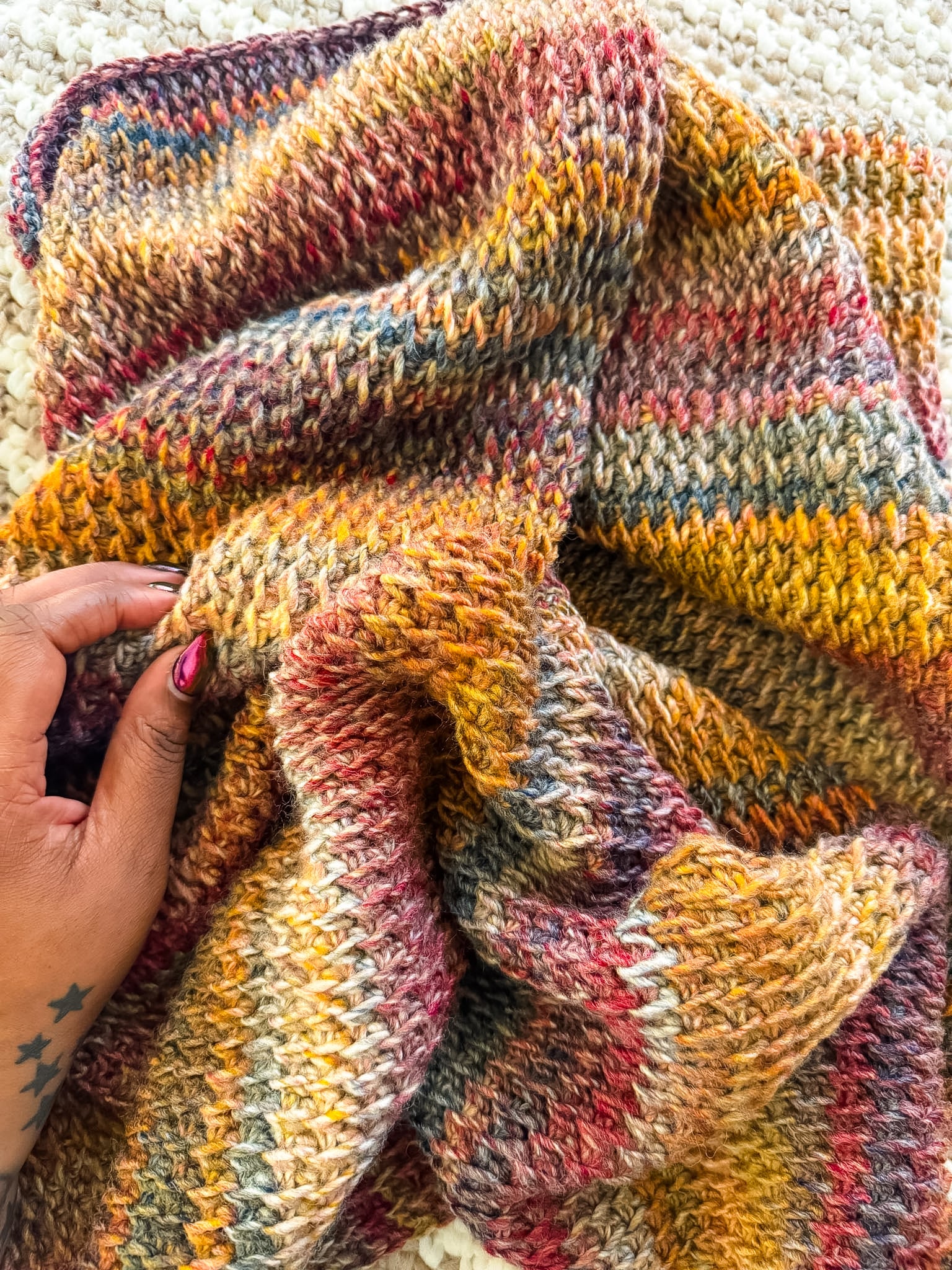
If you’ve been curious about Tunisian crochet, you’re in the right place. With its beautiful knit-look stitches and incredible range of textures, there’s so much to explore with this technique.
PIN IT NOW, READ IT LATER
I stumbled onto Tunisian crochet at a yarn convention, and it completely reignited my love for crochet. One chance encounter, and I was hooked. (I couldn’t resist.)
What keeps me coming back? The incredible textures, stitches that look just like knitting (but with a single hook!), and endless ways to play with color and stitches.
Whether you’ve never picked up a Tunisian hook or you’ve only admired the technique from afar, you’re in the right place. There’s SO much you can do with Tunisian crochet, and I can’t wait to show you what’s possible.
Use the links below to jump to whatever you’re most curious about, or start at the top and work your way down.
- What Is Tunisian Crochet?
- Tunisian Crochet Hooks, Tools & Yarn
- First Tunisian Stitches to Play With
- Most Common Tunisian Crochet Questions
- Patterns to Try First
- More Ways to Learn Tunisian Crochet
Let’s Learn Tunisian Crochet!
Want to skip straight to the stitching? My Learn Tunisian Crochet in 15 Minutes video walks you through the basics, from choosing your hook and yarn to working your first stitches and binding off. By the end, you’ll have your very first Tunisian crochet swatch!
What Is Tunisian Crochet?
Tunisian crochet is a technique that combines elements of traditional crochet and knitting to create a fabric that looks and feels a little different from either one.
You still use a crochet hook and work with yarn, but instead of completing one stitch at a time, you’ll collect multiple loops on your hook before working them off.
Unlike traditional crochet, where you typically finish each stitch before moving to the next, Tunisian crochet is worked in two passes:
Forward Pass: Work across your row, picking up loops and keeping them on your hook.
Return Pass: Work your way back across those loops, closing them to complete the row.
Both passes are worked from the same side of your fabric, so there’s no need to turn your work after every row like you would in traditional crochet.
The result is a fabric with beautiful structure and a distinctive woven quality. Some Tunisian stitches look remarkably like knitting, while others have a personality all their own. The fabric is often denser than traditional crochet, making it wonderful for blankets, accessories, home decor, and even garments.
It’s a familiar way of working with yarn, but with a whole new world of possibilities.
Tunisian Crochet Tools & Yarn: Getting Started
One of my favorite things about Tunisian crochet is that you don’t need a mountain of supplies to get started. A hook, some yarn, and a few basic notions are plenty.
But the tools you choose can make a big difference in how your stitches look and feel, so let’s find the right ones for you.
Choosing a Tunisian Crochet Hook
The biggest difference between a Tunisian crochet hook and a traditional crochet hook is its length. Since you’re collecting loops as you work across each row, you need enough room to hold all those stitches. That’s where longer hooks and flexible cables come in.
Hook material makes a difference, too. Wood and bamboo have a little more grip, which can help you control your stitches as you’re learning. Metal hooks offer a smoother, faster glide. It’s really a matter of personal preference.
Now, let’s look at the different hook styles and what they’re best used for.
// Straight Tunisian Crochet Hooks
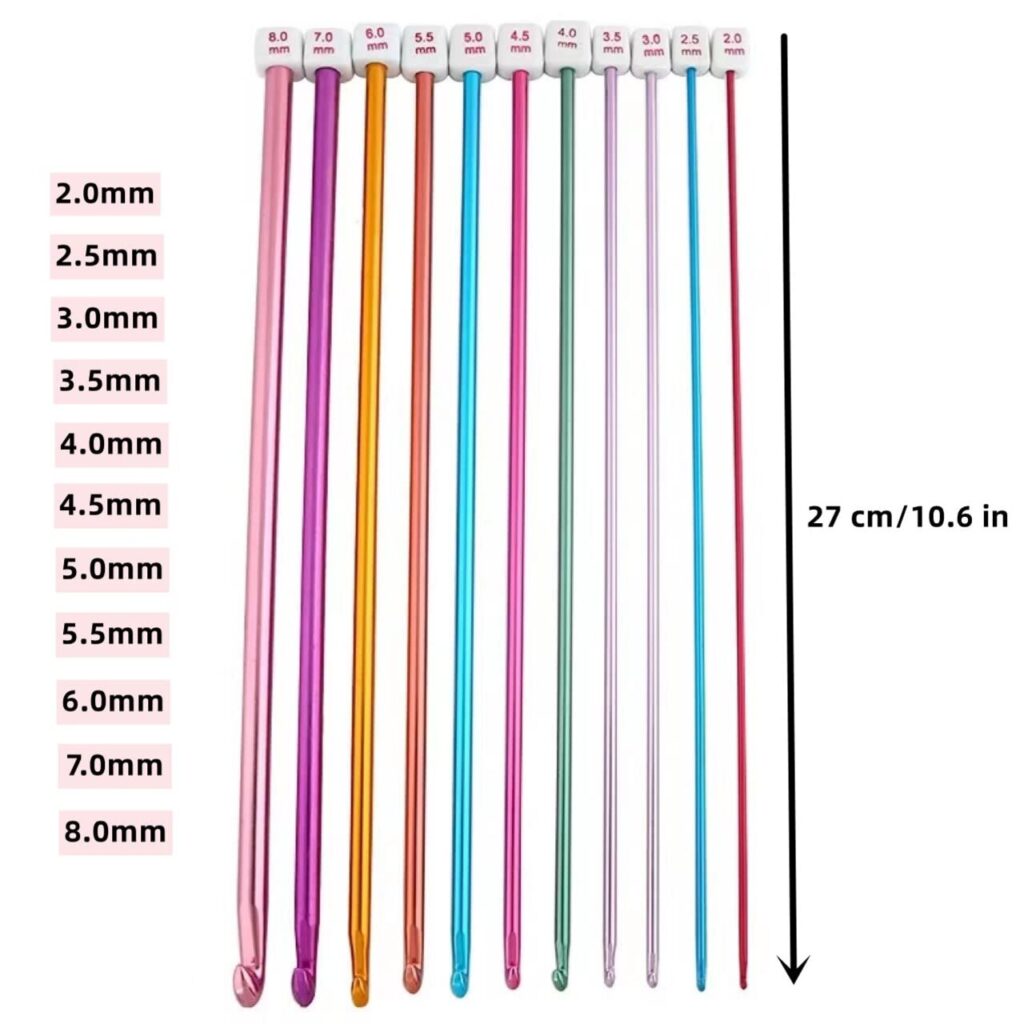
These look like extra-long traditional crochet hooks, usually with a stopper at one end to keep your stitches from sliding off.
They’re great for practice swatches and smaller projects like scarves, dishcloths, and accessories. A basic straight hook is an affordable way to give Tunisian crochet a try.
// Interchangeable Tunisian Crochet Hooks
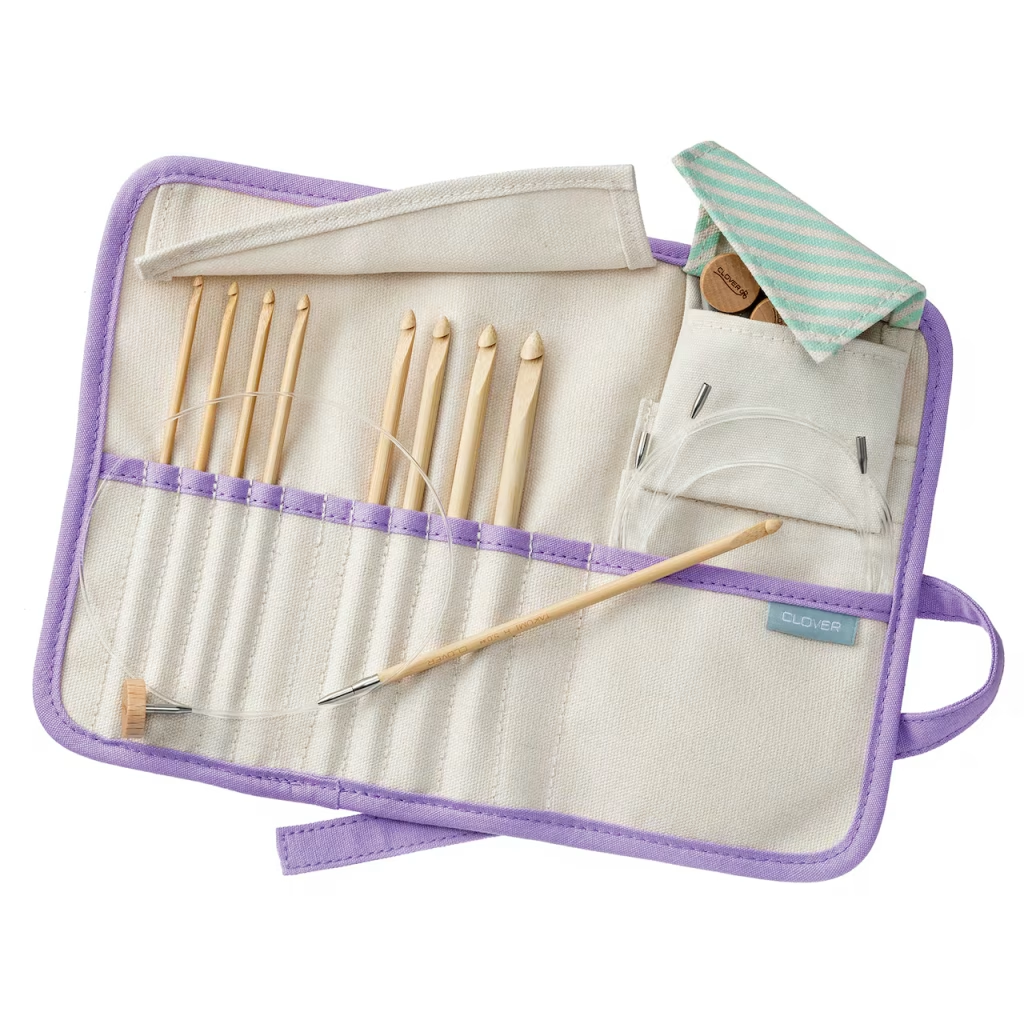
These are my personal favorites for their versatility. Interchangeable hooks connect to flexible cables in different lengths, giving you room for everything from a narrow scarf to a full-size blanket.
// Double-Ended Tunisian Crochet Hooks
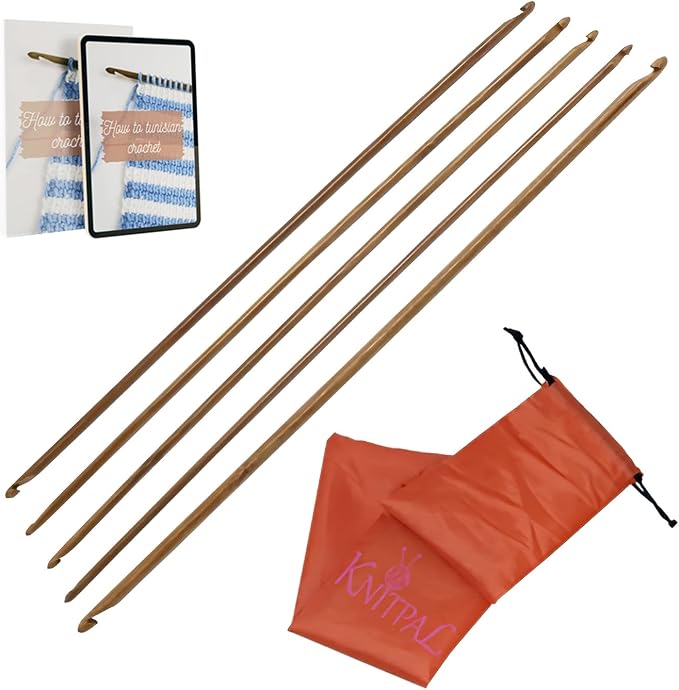
These hooks have a hook on each end, and they open up some fun possibilities! You can use them to work Tunisian crochet in the round for hats, cowls, and other seamless projects. You can even make flat, reversible fabric that looks different on each side.
Double-ended hooks use two strands of yarn, and playing with two different colors can create some really beautiful effects. You won’t need one to get started, but they’re a fun tool to explore once you’ve got the basics down.
// Traditional Crochet Hooks
You might already have what you need to get started!
A regular crochet hook works just fine for a small practice swatch, as long as it has a smooth shaft and enough room to hold your loops. Avoid bulky ergonomic handles that get in the way of sliding your stitches along the hook.
You won’t be making a king-size blanket this way, but it’s perfect for learning the technique before buying new tools.
Still deciding which hook is right for you? In my Tunisian Crochet Hook Review, I put every hook in my collection to the test, sharing what I love, what I don’t, and which ones are worth the investment.
Choosing the Right Hook Size
Here’s something that surprises a lot of beginners: you’ll generally want a larger hook for Tunisian crochet than you’d use for traditional crochet with the same yarn.
Tunisian crochet naturally creates a denser fabric, and going up in hook size gives your stitches room to relax. The result is better drape, less curling, and a fabric that’s more comfortable to work with.
Here’s where I recommend starting:
- DK-weight yarn: 6mm Tunisian crochet hook
- Worsted-weight yarn: 6.5mm to 8mm Tunisian crochet hook
These are starting points, not hard-and-fast rules. Your yarn, stitch pattern, and personal tension all play a part.
My best advice? Make a swatch. Try a couple of hook sizes and pay attention to how the fabric looks and feels. You’re looking for stitches that are easy to work and a fabric with the drape you want.
Tunisian Crochet Hooks Worth Trying
I’ve tried a LOT of Tunisian crochet hooks over the years, from basic straight hooks to some pretty fancy interchangeable sets. And after putting them all to the test, I’ve definitely found a few favorites.
You don’t need the most expensive hooks to make beautiful Tunisian crochet. It really comes down to your budget, experience, and what feels good in your hands.
Here are three standouts from my hook reviews:
// Best for Beginners:
Clover Takumi Tunisian Combo Set. These bamboo hooks offer a comfortable grip, a smooth glide, and interchangeable cables. They’re a great introduction to a full Tunisian crochet hook set.
// Best Budget Set:
Knitter’s Pride Dreamz. Colorful wooden hooks that deliver excellent quality without a big investment. A solid choice if you want more flexibility without spending a fortune.
// Best Overall Set:
ChiaoGoo T-Spin. My top pick for versatility, durability, and quality. The well-crafted bamboo hooks and interchangeable cables make them a pleasure to work with.
Want to compare more options? Check out my Best Tunisian Crochet Hooks roundup, where I review eight categories of hooks and share what makes each one stand out.
A Few Other Supplies Worth Having
You don’t need much beyond your hook and yarn, but a few everyday notions will make your projects easier to manage.
- Locking stitch markers: Especially helpful for identifying that tricky last stitch of a row and keeping your stitch counts on track.
- Tapestry needles: For weaving in ends and putting the finishing touches on your projects.
- Blocking supplies: A blocking mat, pins, and a little water or steam can help relax your stitches, improve drape, and tame curling.
Nothing fancy here. If you’ve been crocheting for a while, you probably already have everything you need.
What’s the Best Yarn for Tunisian Crochet?
When you’re learning something new, the last thing you need is yarn that’s working against you.
For your first few swatches, choose a smooth DK or worsted-weight yarn in a light or medium color. You’ll be able to see the stitches clearly and find exactly where to insert your hook.
Wool and acrylic are both great beginner-friendly choices because they have a little give as you work. Cotton works beautifully, too, especially when you want crisp stitch definition, but its lower elasticity can take a little getting used to.
I’d save the darker colors, fluffy mohair, and heavily textured yarns for later. They’re beautiful, but they can make learning the basics more challenging than it needs to be.
And once you’ve found your rhythm? That’s when the fun really starts.
Tunisian crochet is especially beautiful in hand-dyed yarns, from subtle tonals to bold variegated colorways. Different fibers and stitch combinations can completely transform the look and feel of your fabric.
That’s one of my favorite things about Tunisian crochet: even a familiar yarn can surprise you when you work it in a new way.
Tunisian Crochet Stitches: From Basics to Beautiful Texture
Tunisian crochet has an incredible range of stitches, from beautiful woven textures to ones that look remarkably like knitting. And you don’t need to learn them all at once.
Start with Tunisian Simple Stitch to get comfortable with the basics, then build on those skills with stitches that create everything from knit-look fabrics to delicate openwork designs.
Here are four of my favorites to get you started.
// Tunisian Simple Stitch (Tss)
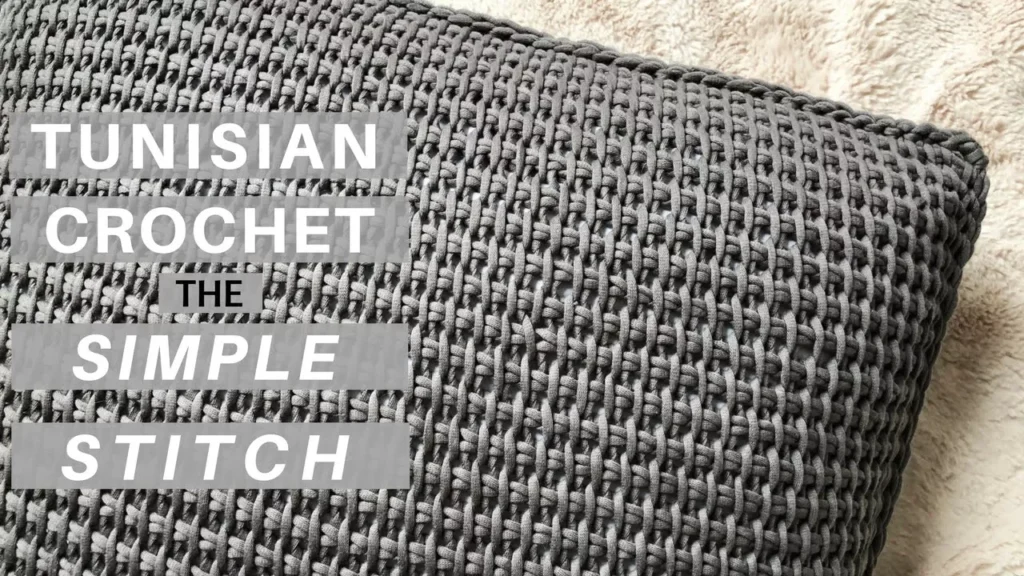
If Tunisian crochet had a starting line, this would be it.
Tunisian Simple Stitch is one of the most fundamental stitches in the craft. You’ll insert your hook under the front vertical bar of each stitch, pulling up a loop as you work across the row.
The result is a sturdy fabric with a beautiful woven-looking texture that’s distinctly Tunisian crochet.
Think of it as the Tunisian crochet equivalent of learning single crochet. Once you’ve got this stitch down, so many other techniques start to make sense.
Ready to give it a try? Check out my 3 Beginner-Friendly Tunisian Crochet Stitches tutorial to learn Simple Stitch and explore a couple more techniques.
// Tunisian Knit Stitch (Tks)
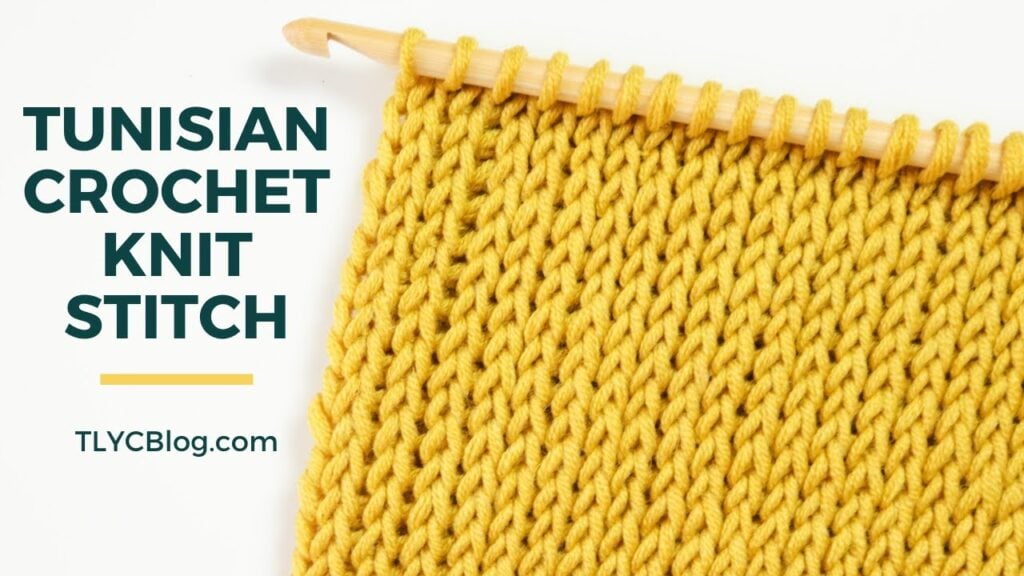
Want the look of knitting with a crochet hook? You’re going to love this one.
Tunisian Knit Stitch creates those familiar V-shaped stitches you see in stockinette knitting. It’s one of my favorite ways to get that classic knit look without picking up two needles.
Instead of working under the front vertical bar, you’ll insert your hook between the front and back bars of each stitch, pushing through to the back of your work.
The trick is to keep your tension nice and relaxed, since this stitch can get pretty dense when worked too tightly.
It’s a beautiful choice for cozy accessories, blankets, and garments.
Follow along with my Tunisian Knit Stitch video tutorial to see exactly how it’s done.
// Tunisian Rib Stitch
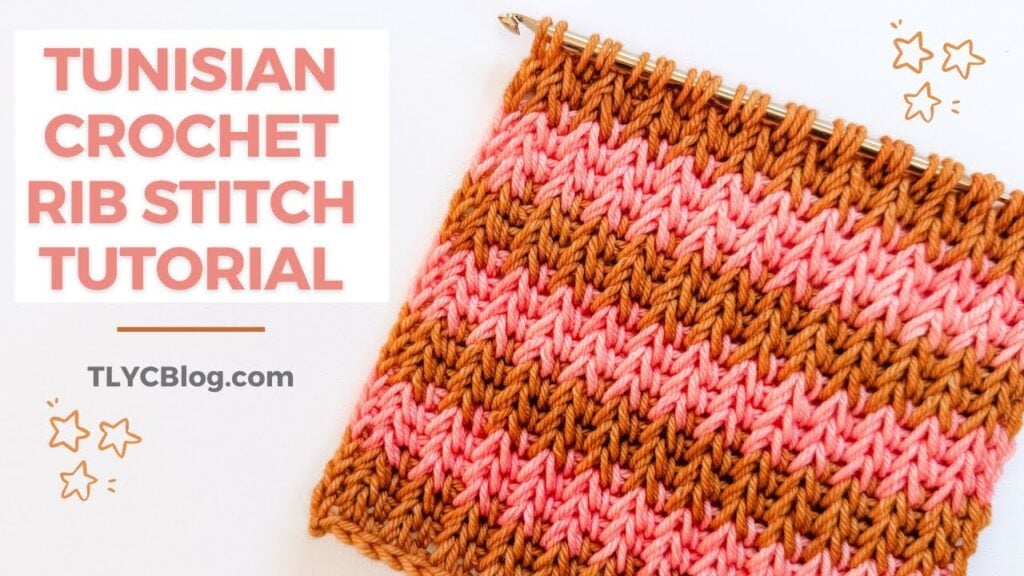
Now we’re getting into some serious texture!
Tunisian Rib Stitch combines simple stitches and full stitches to create beautiful raised columns with a knit-inspired look. It has a little stretch, lovely drape, and just enough dimension to make even a simple project stand out.
I love this stitch for sweater cuffs, hats, scarves, or even an entire cardigan. And while it looks intricate, it’s surprisingly easy to learn once you’ve got the basic Tunisian crochet rhythm down.
Want to give it a try? Follow along with my Tunisian Rib Stitch video tutorial to learn it step by step.
// Tunisian Arrowhead Stitch
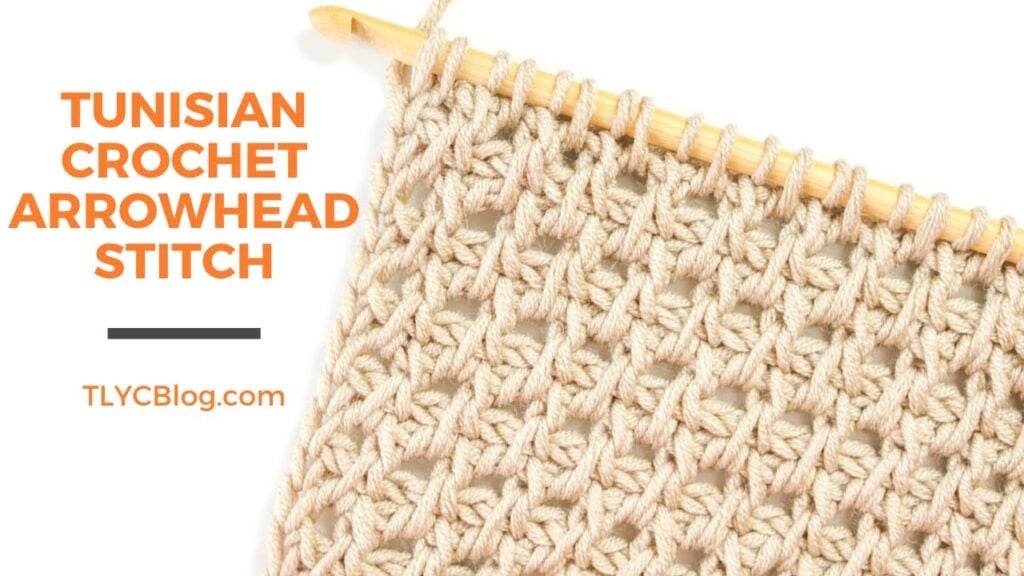
Ready for something a little different?
The Tunisian Arrowhead Stitch creates beautiful openwork with a delicate geometric pattern. It’s light, airy, and a great reminder that Tunisian crochet doesn’t have to be thick or dense.
I love how the open spaces let the yarn shine. It’s a gorgeous choice for lightweight shawls, wraps, and other projects where you want a little extra drape and movement.
See how it all comes together in my Tunisian Arrowhead Stitch video tutorial, where I’ll walk you through creating this beautiful openwork texture.
Tunisian Crochet: Your Most Common Questions
Whenever I teach Tunisian crochet, a lot of the same questions come up. And I get it. Even if you’ve been crocheting for years, learning a new technique can make you feel like a beginner all over again.
Let’s tackle a few of the questions that tend to come up along the way.
// Do I Need to Know Traditional Crochet Before Learning Tunisian Crochet?
Not at all!
Knowing how to hold a hook and manage yarn tension can give you a head start, but you don’t need any previous crochet experience to learn Tunisian crochet.
In fact, sometimes complete beginners pick it up faster because they aren’t comparing every step to traditional crochet.
Come as you are. We’ll figure it out together.
// Why Is My Tunisian Crochet Curling?
Probably nothing! Curling is completely normal in Tunisian crochet, especially with stitches like Tunisian Simple Stitch and Knit Stitch.
The way the stitches are constructed creates tension that pulls the fabric forward. Using a larger hook and keeping your tension relaxed can help, but blocking is one of the best ways to tame that curl. Lay your fabric face down on a blocking mat, pin the edges, and block according to your yarn’s care instructions.
You can also explore stitch patterns that naturally resist curling, like my Tunisian Honeycomb Stitch.
A little curl doesn’t mean you’ve done anything wrong.
// Why Are My Tunisian Crochet Edges Uneven?
Those edge stitches can be sneaky!
One of the most common beginner mistakes is missing the last stitch of the forward pass. In most basic Tunisian stitch patterns, you’ll want to insert your hook under both loops of that final edge stitch to create a neat, stable edge.
A locking stitch marker can help you spot it while you’re learning. And don’t forget to count your loops before starting the return pass.
// How Do I Keep Track of My Tunisian Crochet Rows?
Since Tunisian crochet uses two passes to complete a row, try to finish your return pass before putting your project down. That way, you’ll have just one loop on your hook when you come back.
If you need to stop mid-pass, use a stitch marker or make a quick note about where you left off.
// How Do I Bind Off Tunisian Crochet?
Once you’ve finished your last row, you’ll notice those open-looking stitches along the top edge of your work. Let’s give them a nice, clean finish!
The most common method is a slip-stitch bind-off. Work across the row, inserting your hook as you would for your stitch pattern, but instead of leaving loops on your hook, pull each new loop through the one already there.
Keep your tension nice and relaxed so the edge doesn’t pull tight or pucker. Once you’ve worked across, fasten off and weave in your ends.
You can see the whole process in my Learn Tunisian Crochet in 15 Minutes tutorial.
You’ve Got the Stitches. Now Let’s Make Something!
Ready to put those new Tunisian crochet skills to work? You don’t have to jump into a big, complicated project to make something beautiful.
Start small, build your confidence, and have fun along the way. I’ve picked a few favorites that will help you practice your stitches while making something you’ll actually use (or love giving as a gift!).
// Charming Trio: Start Small
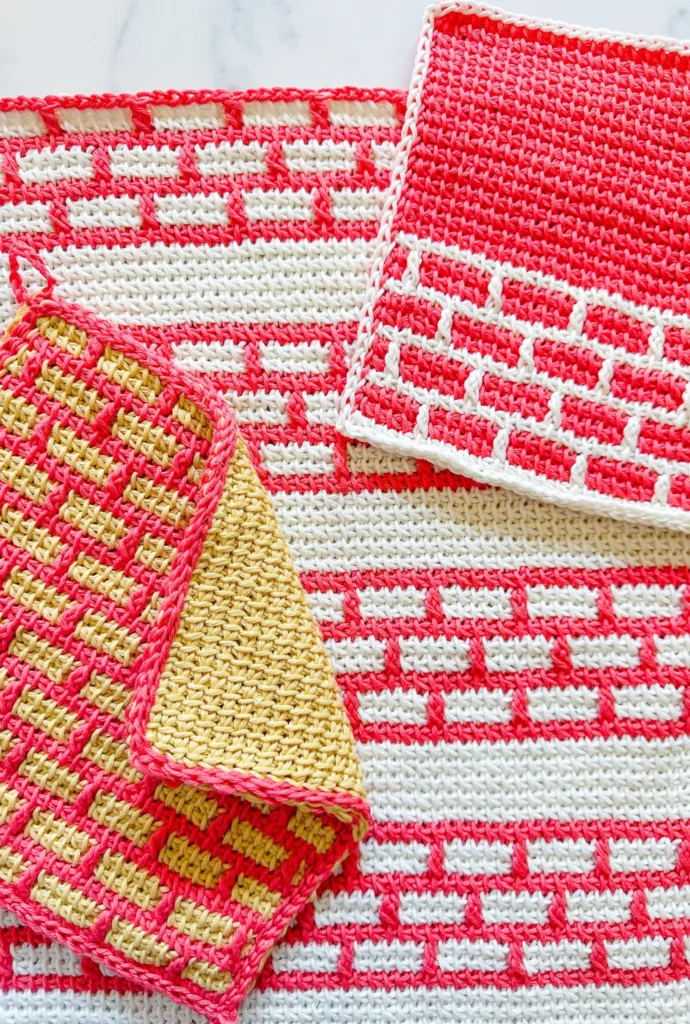
Let’s start with something practical! The Charming Trio includes a washcloth, hand towel, and double-thick potholder that build on Tunisian Simple Stitch with colorful Brick Stitch details.
Three useful projects with plenty of opportunities to practice, explore color changes, and get comfortable with your stitches. And who doesn’t love a little handmade goodness in the kitchen?
Free Pattern | Printable PDF | Video Tutorial
// Lamia Wrap: Watch It Grow
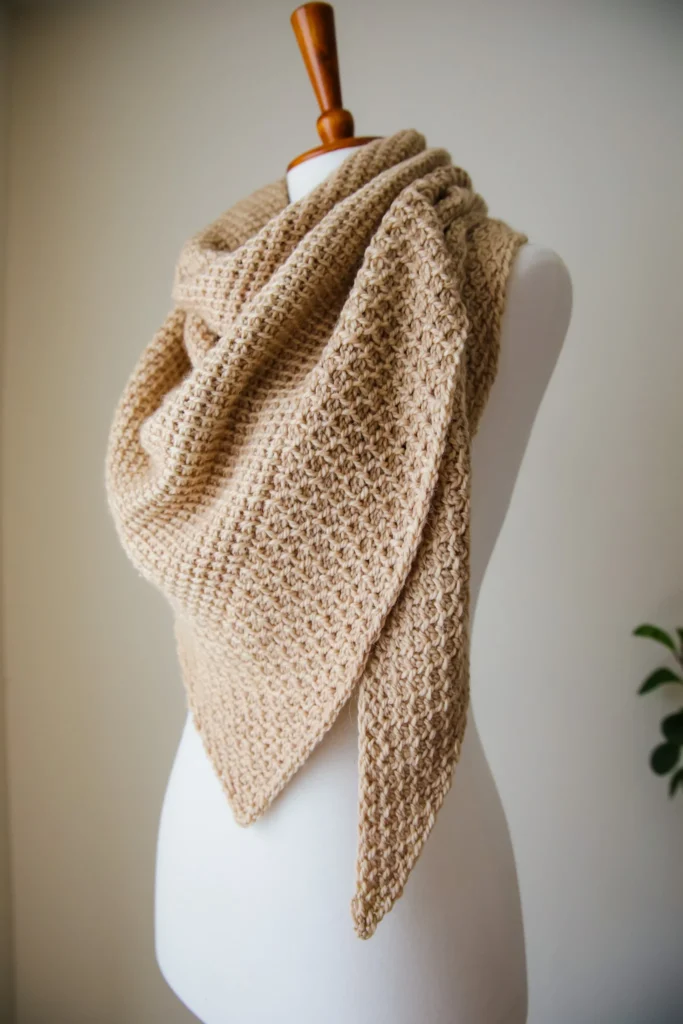
This one starts with just three stitches and grows into a beautiful triangular shawl as you work.
The Lamia Wrap is a lovely way to practice Tunisian crochet increases while watching your project take shape row by row. It’s simple enough to settle into a rhythm, with a finished piece you’ll be excited to wear.
Free Pattern | Printable PDF | Video Tutorial
// Tiffany Ear Warmer & Cowl: Try Something New
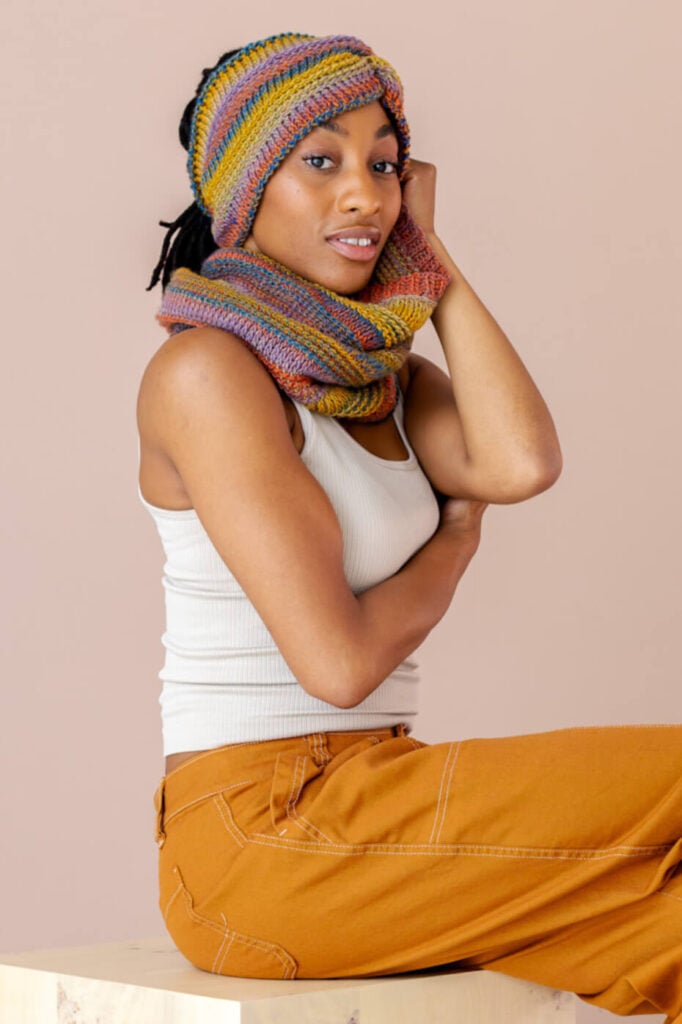
Ready to take your Tunisian crochet skills in a new direction? Let’s go in the round!
The Tiffany Ear Warmer & Cowl introduces Tunisian crochet in the round with two cozy accessories that are as fun to make as they are to wear.
It’s a great next step once you’re comfortable with the basics, and a chance to discover what else you can do with your Tunisian crochet hook.
Free Pattern | Printable PDF | Video Tutorial
// Elmore Blanket: Go Bigger!

Feeling ready for something a little more substantial? The Elmore Blanket is a beautiful next challenge.
Its Tunisian Simple Stitch body keeps things relaxing, while the textured Honeycomb Stitch border adds a lovely finishing touch. It’s a great way to practice consistent tension and tackle a larger project without juggling complicated stitches.
And when you’re finished, you’ll have a cozy handmade blanket to gift or keep for yourself.
Free Pattern | Printable PDF | Honeycomb Stitch Tutorial
Still looking for your next project?
Browse even more free Tunisian crochet patterns here on the blog. There’s plenty more to make once you’re ready to keep exploring!
More Ways to Learn Tunisian Crochet
One of the things I love most about Tunisian crochet is that there’s always something new to discover. Once you’ve learned a few stitches, you’ll start seeing all kinds of possibilities for your next project.
And whether you love learning from a book, watching a video, or stitching alongside other makers, I’ve got plenty of ways to help you keep going.
The Tunisian Crochet Handbook

I wrote The Tunisian Crochet Handbook to be a resource you can reach for again and again. It’s filled with stitch tutorials, helpful techniques, and beautiful patterns to take you from the basics to more adventurous projects.
Think of it as your Tunisian crochet companion, ready whenever inspiration strikes.
Tunisian Crochet Tutorials on YouTube
Sometimes you just need to see a stitch in action!
I’ve put together a whole Tunisian Crochet YouTube playlist with stitch demonstrations, helpful tips, and project tutorials. Whether you’re reviewing the basics or ready to try something new, there’s plenty to keep your hook busy.
Let’s Keep Stitching Together!
Let’s Keep Stitching Together!
Most of all, don’t be afraid to experiment and make Tunisian crochet your own. Try a new stitch, play with color, and see where your creativity takes you.
And don’t forget to tag me @TLYarnCrafts on Instagram so I can see what you’re making!


Hi Toni , Thank you so much for your amazing videos, I have never tried Tunisian Crochet but after seeing your videos i am hooked, you explain everything in so much detail it is so easy to follow, looking forward to more Hilary
Hey Toni, I’m addicted to your sites. Can you please tell me the white or cream colored Tunisian stitch project is? Thanks Vicky
Hi Vicky! Thank you so much for your kind words and visiting the site. The cream-colored project will be released in the next month or so. It’s under wrap for now, but I’ll be sharing it with my Cozy Club email list closer to the release date. You can join the Cozy Club here: http://eepurl.com/coZYM1 🙂
Thanks so much for these videos. Tunisian crochet is one of those things that has been poking me in the side to try forever, but I have not wanted to. I know how beautiful it is and now I am definitely going to try it in ernest. I have the Flatiron shawl in mind. Thanks again.
….justwannacraft,CathyM
You got this, Cathy! I’ve had students to get the hang of Tunisian crochet in just one afternoon. Give it a try and let me know how it goes 🙂
I would like to thank you so much for your videos and website. I am an experienced crocheter, but am new to Tunisian Crochet. You have such a calm, clear way of teaching and I appreciate it.
So far, I have mastered the Smock Stitch (thanks to you), and I look forward to learning more.
What a wonderful, clear, well-thought website! I’m very impressed, and appreciative.
Helo Toni! My name is Icus and I live in Hungary. You’ve discovered your crochet on You Tub. It is even understandable to me who doesn’t know English very much.
Thank you !!! Hi. Icus
Hello! i’m a new subscriber to your YouTube channel and I hope you read this comment. I love to comment on videos that are helpful to me. I watched your Absolute Beginner’s Guide to Tunisian Crochet and 5 Simple stitches for Tunisian Crochet Beginners and I was hooked. After a little practice I decided to try this pattern. I have been diagnosed with ALS and the disease has robbed me of my ability to sew garments and continue my quilting but I can still knit and crochet. Too many “how to”” YouTubers don’t make their instructions easy enough for people with disabilities but yours was excellent. My first 2 rows are kinda wonky because I have also lost some of my fine motor skills but I kept going and it’s looking great. I want to try the braided one next after I obtain a tunisian hook. Thank you for your videos.
Hi Pam! I’m so touched that you took the time to leave your comment here. I’m so glad that I could help, and I hope you continue to have fun learning and experimenting with crochet 🙂
Thank you for the excellent lessons on video. I have enjoyed making the Tunisian simple stitch ear warmers so much, made five to give as gifts. They were well received and being used daily.
I’m so glad the videos were helpful, and it warms my heart that your gifts were received with so much love 🙂
Hi Toni!
Thank you so much for these tutorials, they’re so clear and easy to follow! I’m so excited to finally be learning this great technique!
I’m so glad they’re helpful, Gemma! Let me know if I can help at all along the way 🙂
Hi!!
I’m a long time knitter and crocheter, but I’m sooo excited to learn Tunisian Crochet!! Thank you so much for your instructions! They are very easy to follow and look so fun!
Hi Toni. Can you do a tutorial on tunsion meters square continuous join. So there is no trying to join the squares after the blanket is made.
Thanks
Gwendolyn
Hi Toni. You are so awesome teaching crochet. You make it very easy but I have 1 question for you. I’m trying to learn the Tunisian smock stitch but my brain works better if I have it in writing. Do you have the directions anywhere on your site that I can follow? Thank you so much
Mary
Hi Mary,
We have a video and written tutorial How to Crochet the Tunisian Crochet Smock Stitch – VIDEO TUTORIAL Hope that helps 🙂
Dear Toni,
I’m Prachi a crocheter since 2017, my insta page is Contemporary Crochet Prachi.
It has been my dream, to host an Intermediate level crochet retreat to handhold & encourage makers to try different crochet techniques & make their crochet journey even more interesting.
My retreat (hosts 5 makers only) is finally coming together and is scheduled in the next 10 days – 29 Nov to 2 Dec 2025, Lonavala, Maharashtra, India. I hope you consider to take a look at my insta page – @hangoutbycontemporarycrochet
I love your teaching skills & have learnt so much from you that I’d love to include your Merci cloth pattern in my retreat take home practise kit as a gesture of gratitude for your generous contribution to our community.
Kindly let me know your thoughts. I hope you want to connect with my valuable retreater’s.
Warm regards,
Prachi.
Hey there, Prachi,
How lovely you are to contribute to the crochet community! Your retreat sounds incredible, and we thank you for your support of Toni’s work. Go ahead and shoot us an email at [email protected] with this information, but essentially, you are free to include the pattern in the practice kits you wish to distribute as long as the pattern is bought for the amount of people you have. So, if you have five makers including yourself, then you would purchase 6 patterns from tlyarncrafts.com (or Ravelry). Let me know if you have any other questions, and have an incredible retreat! 🙂
Just learning how to do this style of crochet, I can do regular crochet somewhat. Do you have a video to learn how to read a tunisian crochet pattern? Thanks.
Hey there, Paige! No, Toni does not currently have a video on how to read Tunisian crochet patterns, but she does have a video on how to read crochet patterns. That video can be found here.
She does have a video on the absolute basics of Tunisian crochet that could be helpful in learning the terms of the craft. That video can be found here.
I also suggest Toni’s book, The Tunisian Crochet Handbook, as she walks you through a lot of the basics of the craft, and then provides beginner patterns to hone in your skills 🙂 You can find her book here.
Toni your videos and tutorials were a godsend! I just started Tunisian crochet thinking it would easy given I’ve made amigurumi for about a year. Ha! I was wrong, but your tutorials helped me make the transition. Your stitch marker tip for figuring out the end stitch was the key that finally unblocked me. I am making a shawl using a combination of knit, back post, and mesh stitches. Thank you for starting this amazing blog!
Hey there, Julia 🙂 How lovely! We are so happy you are trying out Tunisian crochet and challenging yourself. Keep up the grind, and you will have yourself a beautiful shawl very soon!