

11 Essential Tools for Blocking Knitwear

Just recently I got into designing and making crocheted shawls. It’s so much fun! The very last step in finishing a shawl is to block it. I get a lot of questions about my process, and that’s why I’m planning a Blocking 101 YouTube series. In the meantime, get prepared with this list of supplies so you can block your own projects.
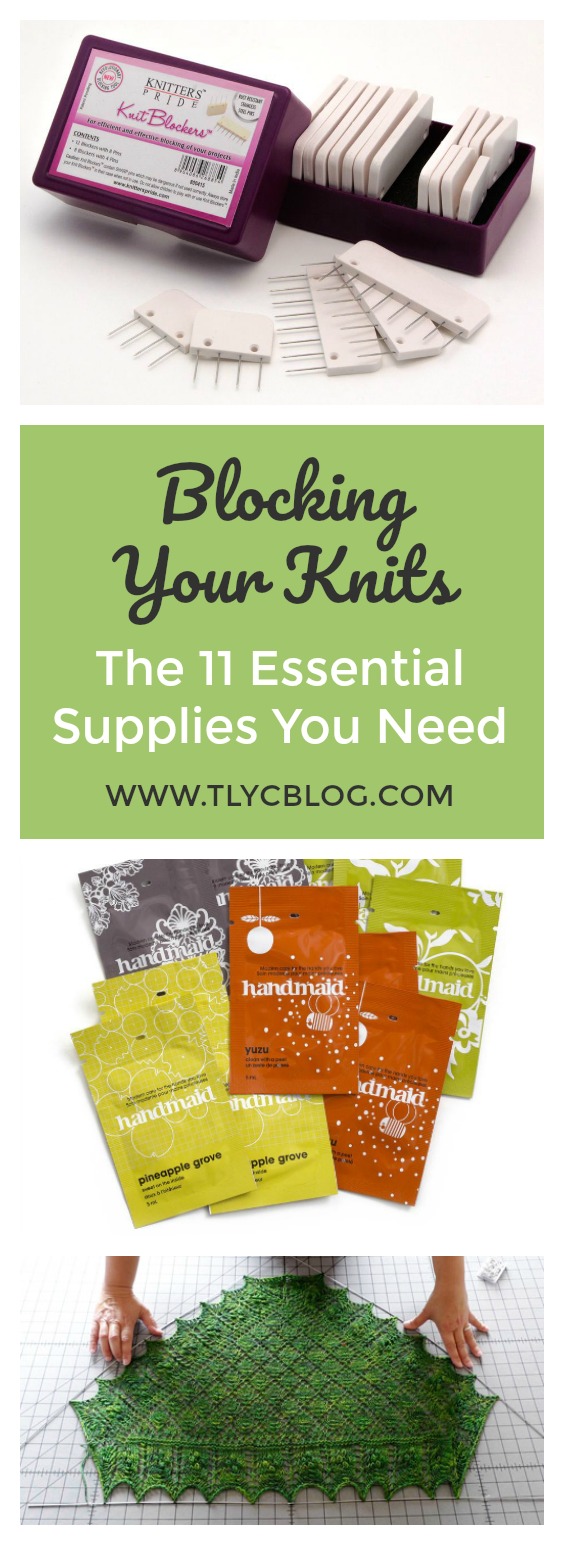
Pin it now, read it later!
 This post contains affiliate links.
What is blocking?
If you’re not familiar with blocking already, here’s a quick overview. Blocking is a finishing technique for handmade items that involves relaxing the fibers so your finished piece has the shape and drape you want. Theoretically, anything can be blocked, but not everything needs to be. You’ll hear a lot about blocking shawls and other knit wearables like sweaters. But items like chunky hats or scarves may be ready to wear after the last stitch. As a maker, you have to decide when to take the extra step.
There are many types of blocking:
- Steam blocking: a process of applying steam to knit/crochet fabric, usually with a garment steamer or an iron
- Spray blocking: start by pinning the knit/crocheted piece to a blocking board then spray with warm water and allow to thoroughly air dry
- Wet blocking: start by submerging the knit/crocheted piece into a warm bath, press out excess water, then pin the piece to a blocking board and allow it to air dry.
My upcoming YouTube series on blocking will go more in depth on each style of blocking and when it is used.
Essential Blocking Supplies
Regardless of what blocking method you plan to use and if you’re blocking knitting or crochet, there are a few supplies you should always keep handy. Some of my favorite sites, like Amazon, Knit Picks and Lion Brand, have exactly what you need.
1. T-Pins
T-pins are used in wet and spray blocking to keep knit fabric in place. Look for a rust-proof t-pins and plenty of them.
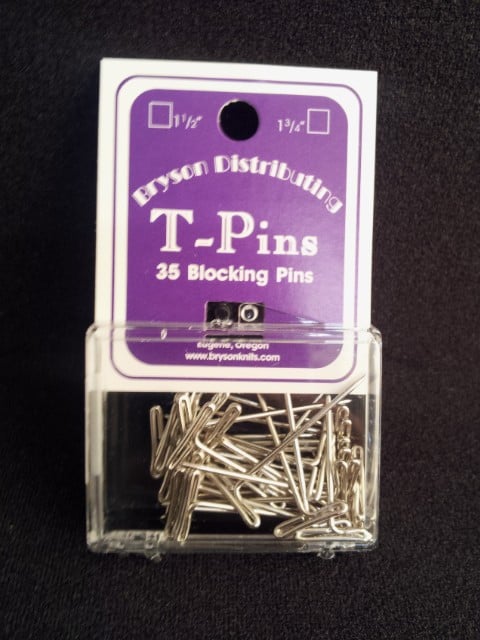
Photo and product: Lion Brand
2. Knit Blockers
Knit Blockers from Knitter’s Pride are the perfect partner to traditional t-pins. They have a series of rust proof pins secured in a plastic casing. They’re especially useful when you have areas of straight knit fabric.
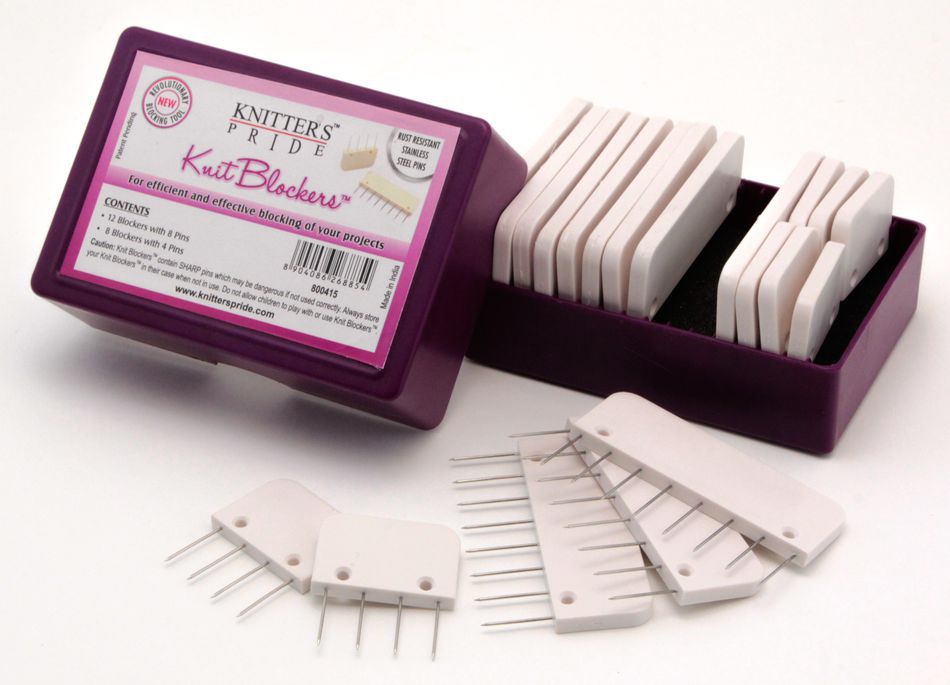
Photo and product: Amazon
3. Lace Blocking Wires
Blocking wires help give your finished pieces shape and consistency. I love them for crescent shawls and when blocking baby blankets.
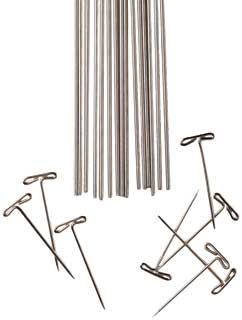
Photo and product: Knit Picks
4. Wool Wash
Wool wash can be any mild detergent or soap used in the blocking process. I’ve seen this soap in bar form, but I prefer liquid. The most recognizable brand of wool wash is from Soak, who offers many scents (as well as unscented) and volumes. Keep this near your sink for easy access.

Photo and product: Knit Picks
5. Spray Bottle
A simple spray bottle is crucial for spray blocking. Fill with a touch of wool wash and some warm water before blocking. I warm mine slightly in the microwave if I plan to use a bottle with leftover detergent in it.

Photo and product: Amazon
6. Ruler
Rulers help to keep the edges of your blocking neat. Use a ruler when pinning your knitting to the board so seams and strait edges turn out exactly as planned.

Photo and product: Amazon
7. Blocking Mats
Find a reliable set of foam rubber mats that fit together like puzzle pieces. Piece them together to fit the size and shape of your knit piece. Keep plenty on hand – I purchased 3 sets of these blocking boards from Amazon for a total of 27 boards.
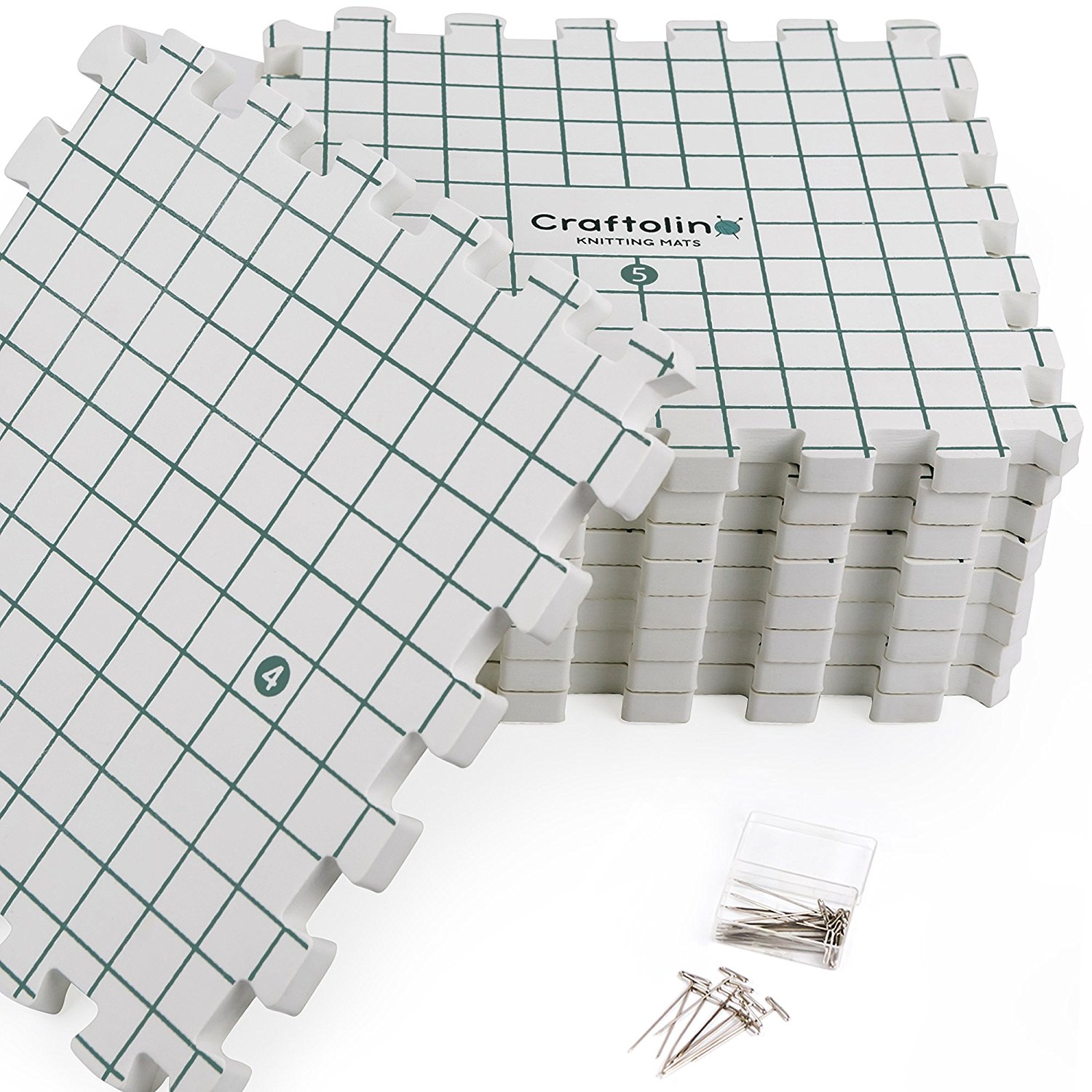
Photo and product: Amazon
8. Wash Basin
I love my Soak Basins because they keep my sinks clear while I’m prepping my projects for blocking. They’re light weight and can be used for other storage when you’re not blocking. They come in plenty of lovely colors from Knit Picks.

Photo and product: Knit Picks
9. Bath Towel
When wet blocking, knits are rolled in towels to press out any extra moisture before being pinned to the board. I like to keep a bath sheet (a.k.a. and extra large bath towel) handy for those oversized knits. This one from Amazon is 35×70 inches.

Photo and product: Amazon
10. Iron
A good iron is important for blocking, and it’s a bonus if you get one that offers vertical steam for hanging items. This Rowenta model is a little on the pricey side but worth every penny.

Photo and product: Amazon
11. Standing Garment Steamer
I steam block the majority of my items so a standing steamer is a must for me. Look for something that offers continuous steam with a large reservoir for water. My current handheld steamer gets the job done but I’ve been eyeing this Elite steamer for a while now.
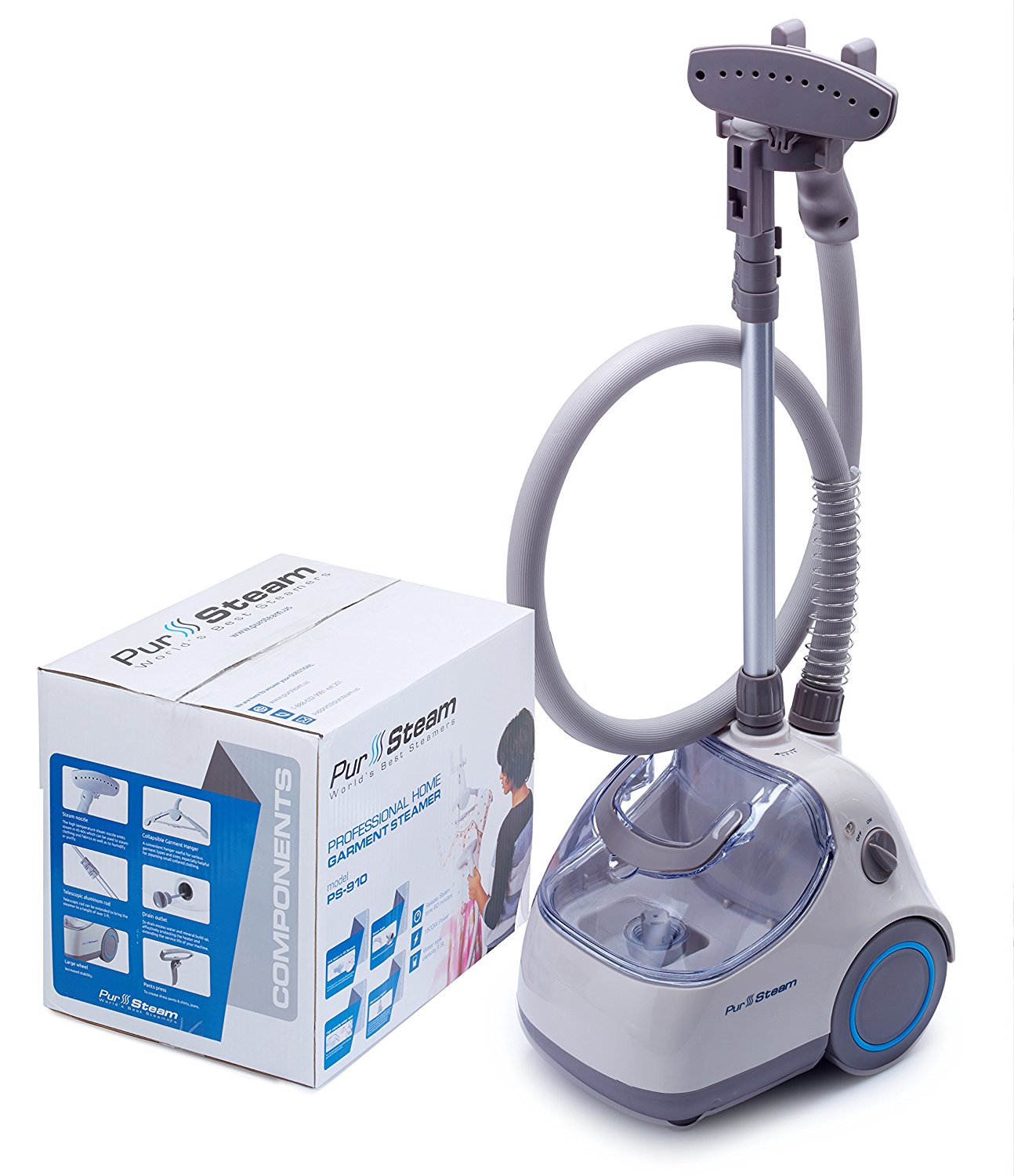
Photo and product: Amazon
Upcoming YouTube Series
I’m super excited to start a new series of YouTube videos about blocking crochet. I’m making samples of some of my favorite TLYC patterns like the Flatiron Shawl, Free Yourself Shawl, and the Astrid Ruana. I’ll use a different blocking method for each and walk you through the process, step by step. I’d love to know your blocking questions! Put them in the comments below and I’ll be sure to cover them in the video series.
Pin this post!


This might be a silly question, but I recently blocked a couple of items, and reading this has made me question if I followed the right process.
My question is, how do you know which method of blocking works for a particular garment; is it based on the fibre type/weight?
Great question, Rachel. For the most part, the blocking method you use is completely up to you. As a rule of thumb, I steam block acrylic projects and wet block wool projects. I’ll explain this more in the upcoming YouTube series 🙂
I’m currently working on the Flatiron shawl, and it is curling in a very big way. What type of blocking do you suggest to take care of that?
Hi Machelle! Yes, the Flatiron Shawl tends to curl pretty heavily along the decrease edge. Give it a good steam with an iron and it will flatten right out. Have fun! I can’t wait to see your finished shawl 🙂
Hi – After you block an item, does it stay blocked once you wash it? Example, a baby blanket
Hi Tammy – great question! You likely will need to re-block your item after you wash it.
I’d love to know what hand held steamer you use. I saw you use a blue one in a video and it looked like a good one.
Hi! Happy to help. It’s this on – LINK