

10 Bad Habits New Crocheters Need to Break
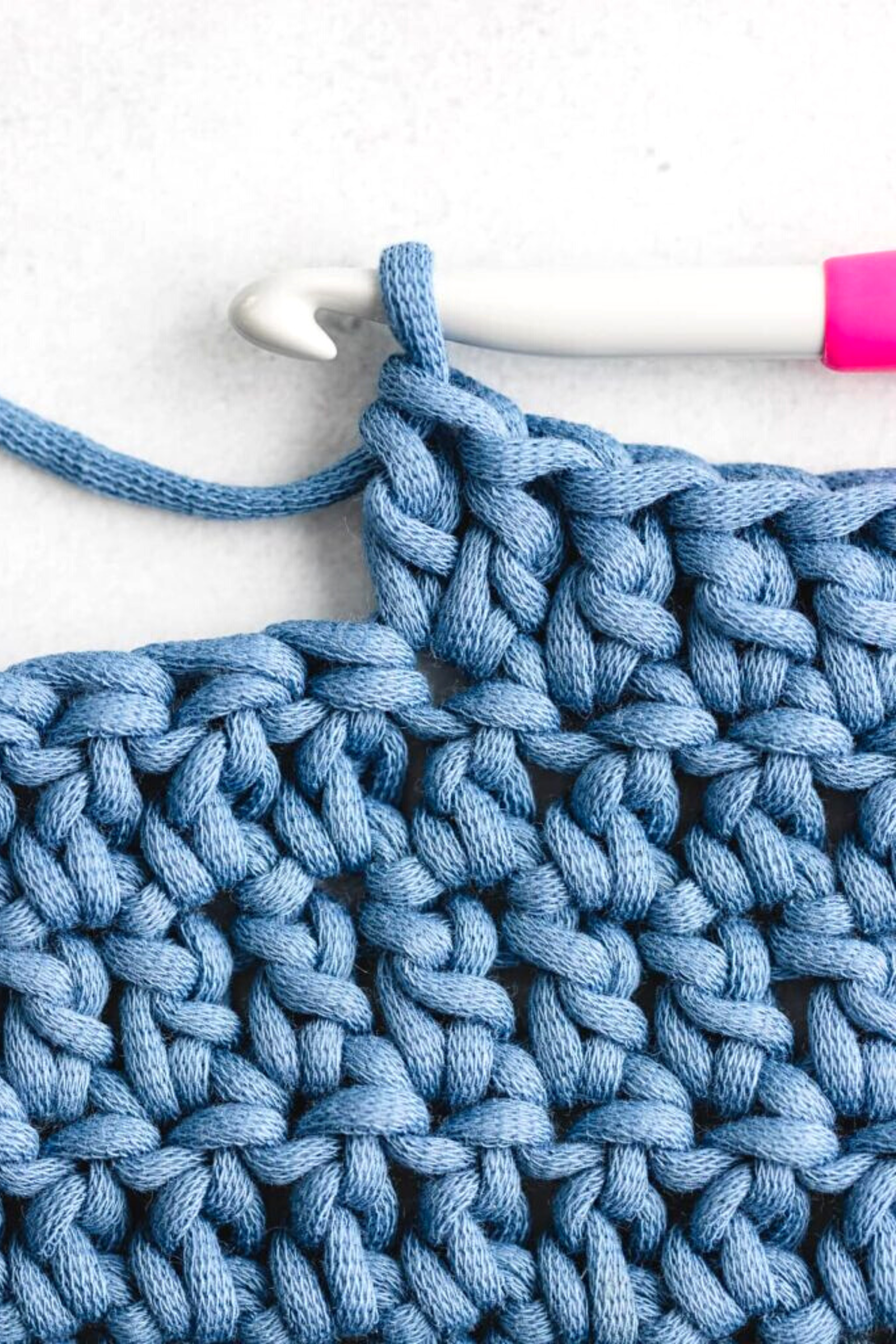
Are you starting out on your crochet journey but unsure if you’re going in the right direction? It can be daunting to learn a new skill, and more often than not, beginners can find themselves forming bad habits from the very start. To help all crocheters—from newbies to experts—steer clear of potential pitfalls, here’s a list of the 10 worst habits I’ve seen from new crocheters. From adding or losing stitches to being impatient with your progress, this article breaks down the common issues aspiring crocheters might face.
This post contains affiliate links that support the content on TLYCBlog.com. All opinions are my own. Find my Privacy & Disclosures Policy here.
PIN IT NOW, READ IT LATER!
Learning to Crochet is a Process
I remember learning to crochet when I was a teenager. My mom put a granny square in my hand and told me to “keep going”. I knew nothing about gauge, picking the right yarn, or even the name of these new techniques. Becoming the proficient crocheter I am today has taken nearly 20 years of trial, error, and mistakes.
Now, don’t worry if you’re already making these mistakes – every bad habit can be broken. With so many more resources available, from YouTube to blogs and books, it’s much easier to hone your crochet skills. Take the time to research and practice your techniques to avoid adding these bad habits to your own list.
10 Bad Habits of New Crocheters
1 // Using the Wrong Yarn / Hook Combo
Commercially available crochet hooks range in size from tiny steel hooks to jumbo 35mm. And yarn ranges from super thin lace weight to category 7 jumbo weight. When there are so many options, it’s easy to pair the wrong hook and yarn. But this mistake can result in unwanted crochet fabric and an uncomfortable stitching experience.
When pairing yarn and hooks, check the manufacturer’s label – they usually have a recommendation. You can also check the pattern you’re working from to see what they suggest. If you’re winging your project or there’s no label on your yarn, start with the hook you think is right. Then adjust your hook up or down until you achieve a crochet fabric that pleases you.
Learn more about pairing hooks and yarn in this blog post.
2 // Not Practicing Your Tension
Tension refers to how tight or loose your stitches are as you make them. Finding the sweet spot where your stitches are even can be frustrating for many new crocheters. But failing to practice this technique may result in you scrapping your crochet experience altogether.
Try pulling from the center of the ball when crocheting – this prevents the yarn from rolling around and interrupting your flow. Adjust your hook size to better fit the yarn you’re using. Also, adjust how you hold the yarn – try wrapping the yarn just once or even twice around your pointer finger to loosen/tighten your tension.
This video has some great tips on improving your crochet tension.
3 // Constantly Adding or Losing Stitches
Have you ever tried to make a scarf and ended up with a wavy mess? You are likely adding or dropping stitches while making your fabric. Most new crocheters have difficulty identifying where to put the first and last stitch of their row, so the count gets off.
It may be helpful to count your stitches as you work your rows while you’re still learning. I also recommend using locking stitch markers, a.k.a. “training wheels”, to mark the first and last stitch of your row. There’s no shame in using an aid while you practice a new technique.
See exactly how to keep straight edges in your work using stitch markers in this video.
4 // Avoiding a Gauge Swatch
Gauge is the number of stitches and rows within a measurement of crochet. For example, the gauge for my Quinn Baby Blanket is 4″ = 14 stitches x 8 rows. This means that a 4″ measurement of fabric should ideally be 14 stitches across and 8 rows high. Achieving the correct gauge ensures my finished piece comes out to the size I was expecting and uses the correct amount of yarn.
Many crocheters loathe making a gauge swatch, but it is truly the best way to determine if you’re on the right track in your crochet project from the very beginning. When working from a pattern, add 1/3rd the number of stitches and rows as recommended in the gauge measurement. You want to measure the gauge from the center of the swatch, not from the edges. If you don’t have a pattern, try making a gauge swatch at least 6″ square.
Measure the number of stitches and rows in a 4″ square and compare it to your pattern. Too many rows/stitches? Go up on your hook size. Conversely, if there are too few rows/stitches, go down on your hook size. Make adjustments in 0.5mm increments.
5 // Skipping Blocking
If I had a nickel for every time I heard that you don’t have to block crochet fabric, I would be a very wealthy woman. Like many crochet myths, this one has been passed down for generations. Blocking helps to relax our stitches, improve drape, and find the true fit/size of a handmade piece. Why would we skip this just because we’re crocheting? The answer is – we won’t! But, like making a gauge swatch, it’s an extra step that crocheters often ignore.
Blocking does not have to be complicated. My preferred method is steam blocking. You can use a garment steamer or an iron with a steam setting. Lay your piece on a few towels and steam it, lightly tugging and stretching the fabric into place.
I have videos on steam blocking and wet blocking to simplify the process.
6 // Not Learning to Read Patterns
I’m going to say something you probably don’t want to hear. If you don’t learn to read patterns, you willingly miss out on 90%+ of the crochet world. For every “start-to-finish” crochet tutorial on YouTube, there are hundreds, yes HUNDREDS, of written patterns just waiting for you on sites like Etsy, Ribblr, and Ravelry.
Barring any reading challenges you have, learning to read crochet patterns isn’t that difficult. They are made from a combination of abbreviations and punctuation, most of which are explained in the pattern. The trick is reading crochet patterns from start to finish BEFORE starting the project.
Learn the basics of reading crochet patterns in this blog post, or try this video from Simply Daisy.
7 // Not Learning to “Read” Crochet Fabric
Let’s say you’re stitching along and think you’ve made a mistake. You should be able to look at your work, identify the mistake, and sort out how to fix it. Fixing mistakes is easy when you can “read” your crochet fabric, and by read, I mean to be able to identify the stitches within it.
Making practice swatches is the easiest way to learn to read your fabric. Get a stitch dictionary with nice photos and practice the stitches inside it. Do yours look like the photo? Great. If they don’t, try to identify what went wrong and research how to fix it. This way, when you graduate to larger projects, you can see and understand what you did long after the project is over.
8 // Avoiding Unfamiliar Techniques
Everyone gets into crochet for different reasons, and there might be a handful of patterns you like to make repeatedly. But where do you go next once you burn out on double crochet blankets? There’s a wide world of crochet out there, with lots of fun and challenging techniques. Break out of your crochet comfort zone and try Tunisian crochet, amigurumi, corner-2-corner, or mosaic crochet.
“But Toni, I’m just a beginner. I can’t possibly learn those techniques. They’re too hard!” My sweet, sweet child. It’s not hard – it’s just new. The only way to know if you can do something is to try. And the only way to do well at something is to practice. Find a class, a book, or a great YouTube instructor to help you get started, then keep at it.
9 // Only Using Free Patterns
Another way that new crocheters unwittingly limit themselves is by only using free patterns. The same point in #6 applies here – you limit your access to this wonderful crochet world by only using free patterns. Purchasing paid patterns gives us access to well-formatted, printable versions of our favorite designs. We can mark up and transport printed patterns, making them easier to use.
Most (not all) free patterns are only accessible by keeping our phones and tablets open to a particular web page. A pattern will likely set you back $5-$8, typically pennies compared to what we’ll spend on yarn. Start a habit of working the pattern price into your project budget to make it easier to stomach.
10 // Not Being Patient With Themselves
I’ve taught thousands of makers over the course of my crochet career, and I’m always heartbroken to hear that someone has given up too easily. New crocheters, especially adults, often have some justification as to why learning crochet should be easy for them. And, when it’s not, they give up, citing that the craft is “just not a good fit”. I call hogwash.
Like any new technique or hobby, it takes time to become proficient. If this blog post is any indication, learning and understanding crochet go far beyond making a few stitches. There is much to learn, and even natural crocheters hit stumbling blocks. Research the answers to your questions, stay open to trying things a different way, and just keep practicing. Your “aha” moment is coming.
Have you fallen into any of these crochet bad habits? Or do you have a bad habit that I didn’t mention? Let me know in the comments!
Want to build some great crochet habits? Check out my blog posts on crochet hacks & tips, understanding gauge, and 3 important finishing steps.


I really wish yarn companies would add the recommended blocking method to the yarn label!
The best blocking method has to do with the yarn but also the project (stitches used, personal gauge, intended fit and drape, etc.). Steam is great for pieces that need a small amount of adjustment, and wet blocking is for those projects that need more.
Great information. Thank you so much. This has made me not want to give up on crochet!
Beautifully written Toni. I will heed your recommendations.
Thank you for this article.
I am a beginner, but thank God that I found good YouTuber tutorial like you from the beginning.
Keep on shining and do the good work.
I have been a crocheter for over 40 years and learn something new with each project. Thanks Toni for the little “secrets” you have taught me! Never stop learning!!!
I find that for blankets made up of squares and linen stitch blankets, washing them according to the manufacturers directions blocks them very nicely. It really transforms them!
I’ve been crocheting for 40+ years and never knew blocking was a thing! Gamechanger!!
Blocking is MAGIC!!! Thank you for talking about the importance of that final step! 🤩